
When moisture control is critical, rotor chemistry becomes a process-quality specification—not simply a dehumidifier selection.
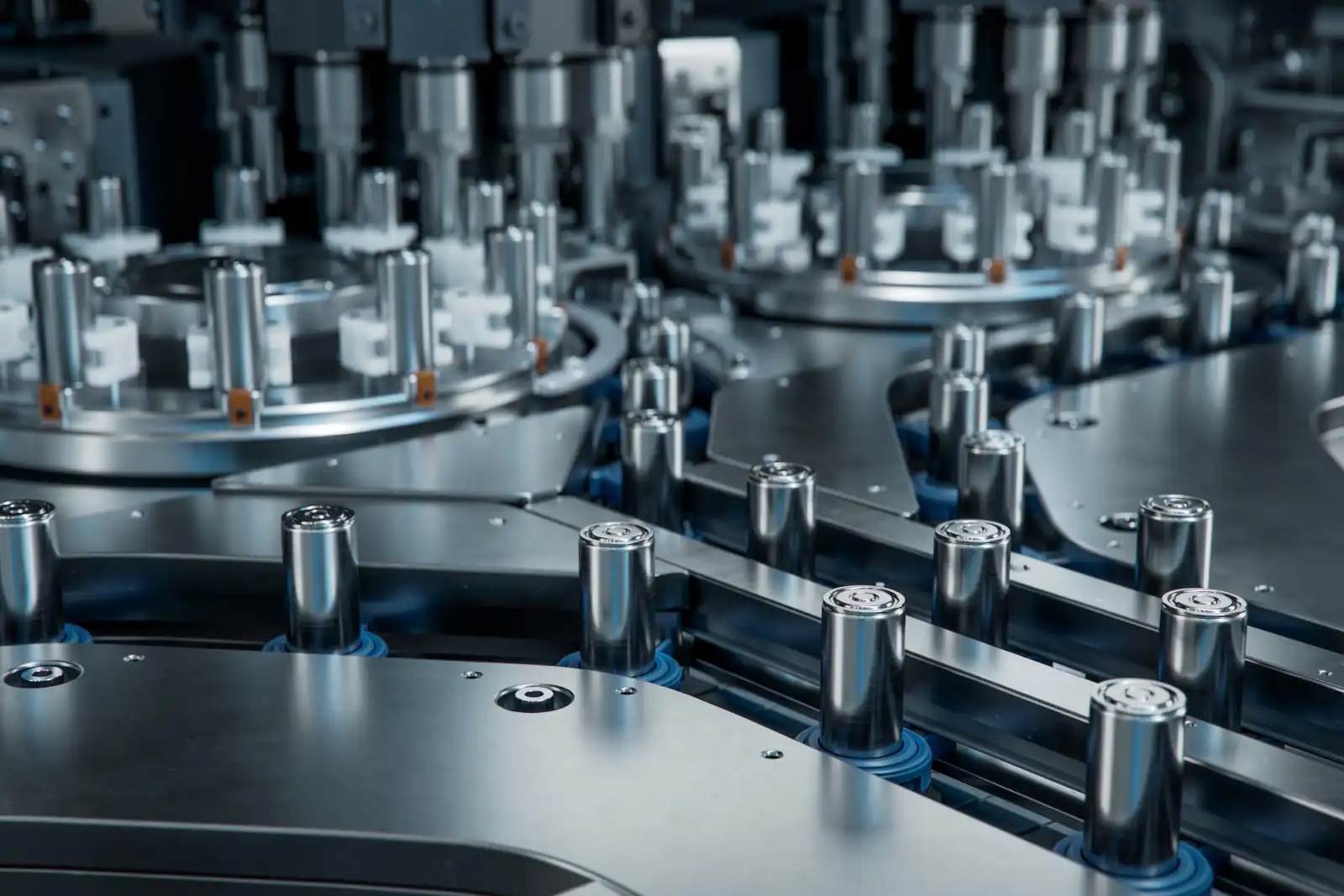
Lithium-ion cell manufacturing depends on an ultra-low-humidity lithium-ion battery dry room, because lithium and moisture-sensitive cell materials can react with water. Electrode handling, electrolyte dosing and cell assembly typically require dew points around -40 °C or lower, while advanced and next-generation chemistries may demand -50 °C, -60 °C or below.
Dehumidifier supply air can be specified still lower to compensate for moisture introduced through personnel, airlocks and outgassing.
1. The dry room is part of the cell-quality system
At these moisture levels, humidity control is not housekeeping. It is part of the manufacturing process. The electrolyte salt lithium hexafluorophosphate (LiPF₆) can hydrolyse when exposed to trace water, forming LiF and acidic fluorophosphate species including HF. The resulting chemistry can attack the solid-electrolyte interphase (SEI), contribute to transition-metal dissolution and accelerate capacity fade. For this reason, electrolyte moisture is tightly controlled and moisture-sensitive operations are performed inside the dry room.
2. A battery dry room is chemically different from a conventional clean room
A dry room continuously recirculates a high fraction of its air through its dry room dehumidifier system. That recirculated air can carry process-derived chemistry—not just water vapour. Acidic species such as HF and volatile fluorophosphates may be present following electrolyte exposure, while solvent vapours such as NMP can originate from cathode slurry processes. Alkaline contaminants can include lithium- and sodium-bearing dusts or aerosols, as well as sodium hydroxide used in the preparation or treatment of some electrode materials. The desiccant rotor therefore operates continuously in a potentially aggressive acid-and-base environment.
3. Why desiccant chemistry matters
The rotor is continuously exposed to the process air stream and is repeatedly regenerated with heat. Its performance therefore depends on more than initial moisture adsorption capacity. The desiccant, binder and substrate must retain chemical stability, mechanical integrity and cleanability throughout service.
4. How non-neutral media can fail
Non-neutral desiccant media can fail in the dry-room environment through four key mechanisms:
- HF attack on silica: silica-gel desiccant is silicon dioxide, and HF can etch SiO₂, consuming active desiccant and reducing moisture-removal capacity.
- Acid–base reactions: media with an acidic or alkaline character can react with opposite airborne species, producing salts and water that can blind or clog pores.
- Conversion to ineffective material: sulphur-bearing contaminants can convert lithium-chloride media to lithium sulphate, reducing its desiccant effectiveness; deliquescent LiCl media can also present salt carry-over concerns.
- Structural degradation: organic or paper-based substrates and binders can degrade under regeneration heat and corrosive vapours, leading to embrittlement, crumbling, particulate shedding and loss of sealing integrity.
5. The consequence is bigger than rotor life
Rotor degradation can translate into unstable humidity control and an upward drift in room dew point. It can also increase maintenance, replacement frequency and downtime. More critically, a deteriorating rotor can introduce acidic, alkaline or particulate contaminants into the dry-room air stream—the very environment that is intended to protect the product.
6. Why pH-neutral media is the correct engineering specification
A pH-neutral desiccant rotor is designed to be chemically inert in the dry-room atmosphere. This pH-neutral media uses an in-situ synthesised metal-silicate desiccant comprising at least 80% of media weight, grown on an inert inorganic fibre substrate. The media is pH-neutral, non-toxic, non-flammable, edge-hardened for seal life and fully water-washable.
What pH-neutral media is designed to deliver
- Neutral surface: avoids driving acid–base neutralisation reactions with airborne contaminants.
- Resistance to the stated dry-room chemistry: designed to withstand HF/fluorophosphate exposure and alkaline/lithium-bearing dust.
- Inorganic structure: helps retain honeycomb integrity under regeneration heat and corrosive vapours.
- Stable low-dew-point performance: helps preserve adsorption performance over service life.
- Non-shedding operation: reduces the risk of returning salt or particulate contamination to the dry room.
- Washability: surface contaminants can be removed by water washing rather than automatically requiring rotor disposal.
Technical comparison
| Attribute | Conventional / non-neutral media | pH-neutral metal-silicate rotor |
| HF vapour | Silica can be etched; active desiccant can be permanently lost. | Chemically resistant; adsorption capacity retained. |
| Alkaline dust | Acid–base reactions can form salts and water; pores may blind or clog. | Neutral surface; no acid–base reaction. |
| Substrate | May use organic/paper-based structures that can embrittle or crumble. | Inert inorganic fibre; retains honeycomb integrity. |
| Contaminant carry-over | Potential salt/particulate shedding back into the dry room. | Non-shedding; supports product-integrity objectives. |
| Cleanability | Generally not washable. | Fully water-washable. |
| Dew-point stability | Performance can degrade and dew point can drift upward. | Stable low-dew-point performance over service life. |
| Service / ownership | More frequent maintenance or replacement may be required. | Long-life design supports lower total cost of ownership. |
The engineering takeaway
In a lithium-ion cell plant, the desiccant rotor is a continuously operating process component inside a recirculating atmosphere that can contain both acidic and alkaline contaminants. At the same time, it must support very low dew points for long periods. That makes media chemistry a critical engineering parameter. A pH-neutral, inorganic metal-silicate rotor is not simply a premium alternative: it is the appropriate specification whenever long-term chemical stability, dew-point control, cleanliness and rotor integrity are required.
For dry-room dehumidification, specify the rotor for the chemistry it will live in—not only the dew point it must achieve.
FAQs
1. What is a lithium-ion battery dry room and why is it important for cell manufacturing?
A lithium-ion battery dry room is a controlled manufacturing environment designed to maintain extremely low moisture levels during moisture-sensitive processes such as electrode handling, electrolyte filling and cell assembly. Maintaining the required dew point helps reduce moisture-related chemical reactions and supports consistent battery quality.
2. How does battery dry room dehumidification help maintain low dew points?
Battery dry room dehumidification continuously removes moisture from recirculated process air to maintain the ultra-low humidity conditions required for lithium-ion battery production. Desiccant-based systems are commonly used because they can achieve and maintain very low dew points under demanding operating conditions.
3. What should manufacturers consider when selecting a dry room dehumidifier?
When selecting a dry room dehumidifier, manufacturers should consider the required dew point, airflow, moisture load, operating conditions, energy efficiency and compatibility with contaminants present in the manufacturing environment. Desiccant rotor chemistry is also important where the air stream may contain corrosive process contaminants.
4. Why does desiccant rotor chemistry matter in lithium-ion battery dry rooms?
Desiccant rotor chemistry matters because the rotor is continuously exposed to recirculated process air and regeneration heat. A chemically stable, pH-neutral rotor can help resist exposure to contaminants such as HF, fluorophosphates and alkaline or lithium-bearing particles while maintaining moisture adsorption performance.
5. How can a dry room dehumidification system support battery manufacturing quality?
A properly designed dehumidification system helps maintain stable low-dew-point conditions throughout moisture-sensitive production areas. Consistent humidity control can reduce moisture exposure, support process stability and help protect the quality and reliability of lithium-ion cells.
Recent Posts