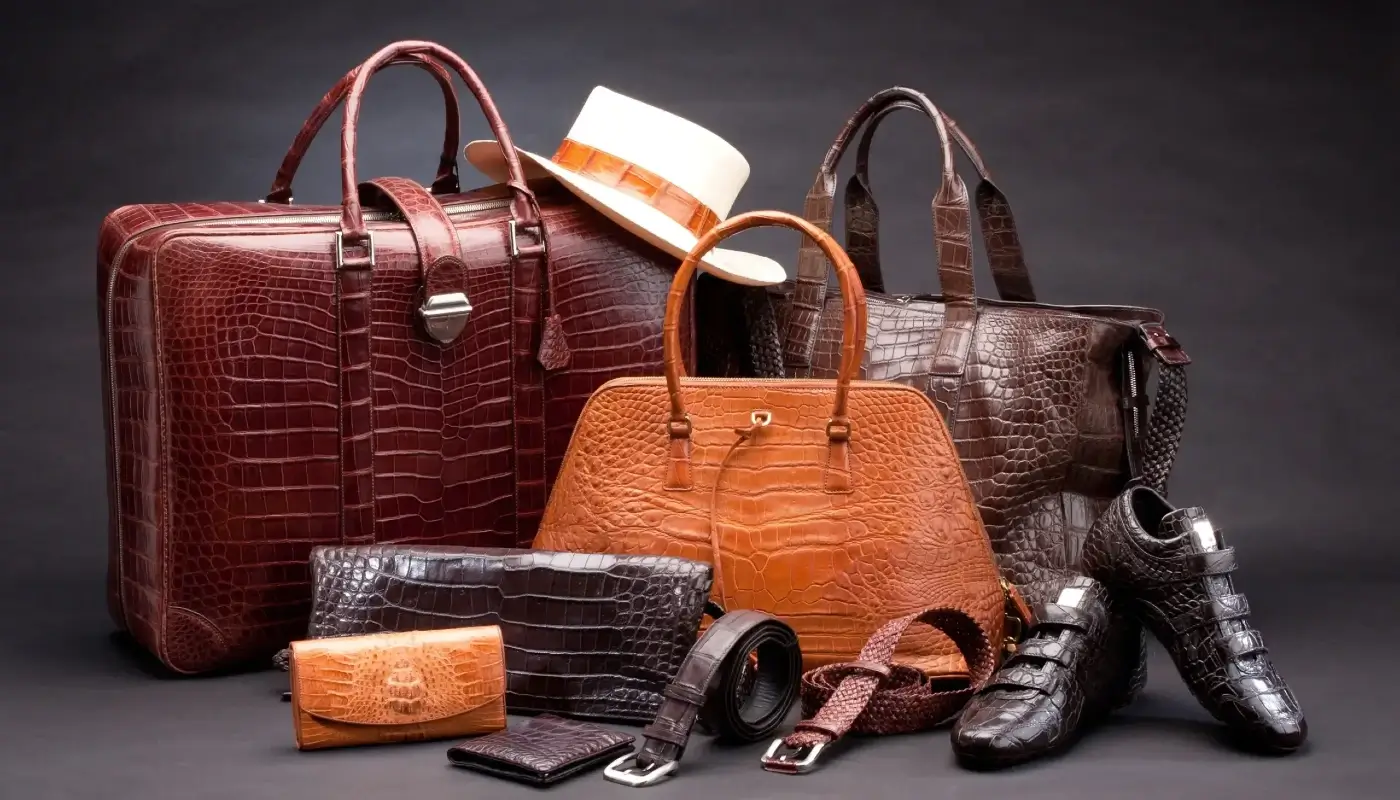
A hide can be perfectly tanned, dyed, graded and priced — and still lose its value before it reaches a customer. Not because anything went wrong on the production line, but because of what happened to it while it was simply sitting still.
Leather is not an inert material. Long after it leaves the drum, it continues to exchange moisture with the air around it. Give it dry air and it gives up its own moisture and oils. Give it damp air and it takes moisture back on, until the surface becomes hospitable to mould. Either way, the air in the godown quietly decides how much of your finished stock is still saleable six months from now, which is why moisture control in leather storage matters.
Most leather businesses measure hide quality, chemistry, thickness and finish with real rigour. Far fewer measure the one variable that acts on every hide, every day, at no cost to itself: relative humidity.
The Numbers That Define Safe Leather Storage
There is a narrow band in which leather stays stable. Outside it, the material starts working against itself.
| Parameter | Recommended range | Optimum |
| Relative humidity | 40% to 55% RH | 45% to 50% RH |
| Temperature | 15°C to 25°C | Cool, stable — not hot |
Two figures matter most. The first is 45–50% RH, the sweet spot where leather neither dries out nor takes on enough moisture to support microbial growth. The second is temperature: 15°C to 25°C, cool and steady. Hot storage accelerates everything that goes wrong in leather; cool storage slows it down.
Note that this is a band, not a target to be beaten. Drier is not better. The instinct to run storage as dry as possible is one of the most expensive mistakes in leather handling.
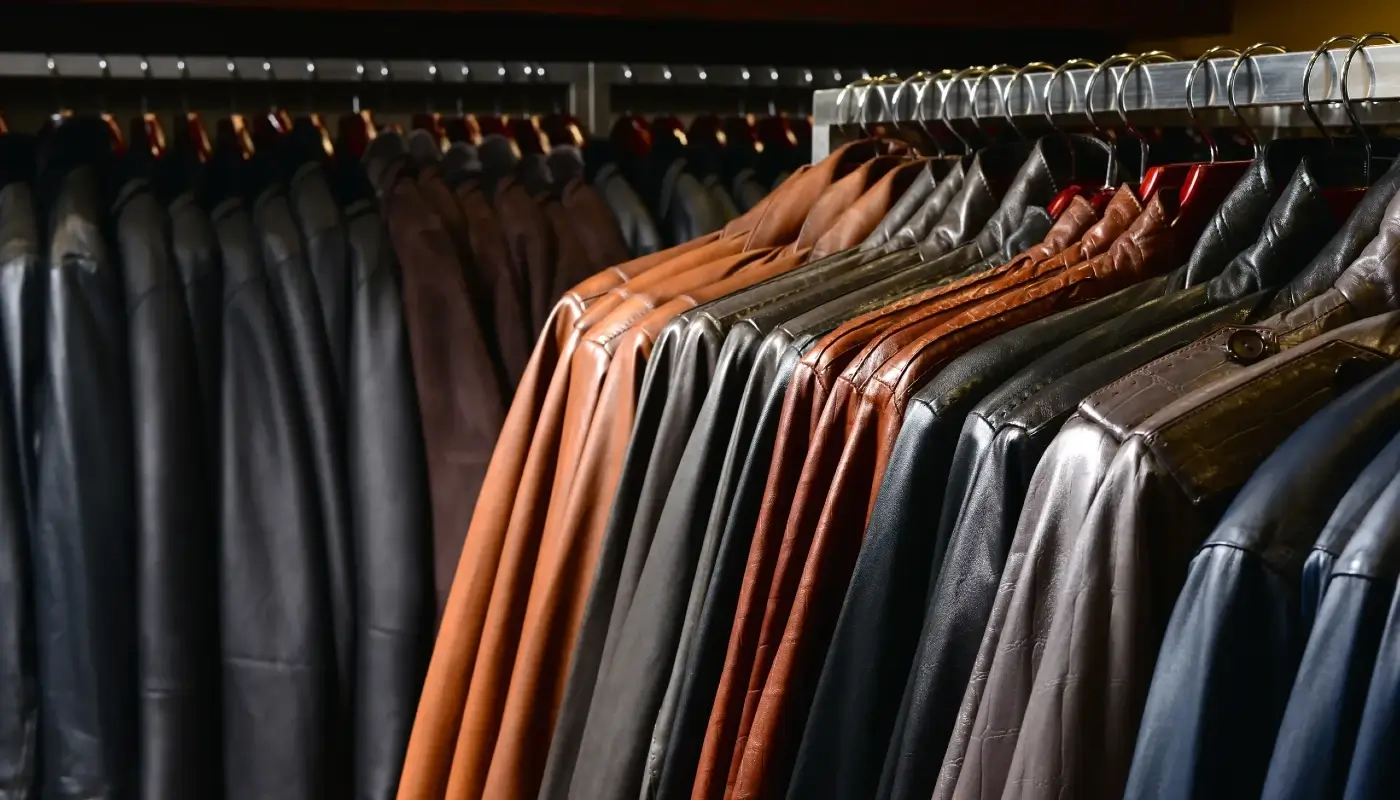
What Happens Below 40% RH: Drying, Oil Loss and Cracking
When the surrounding air is too dry, leather releases moisture into it. The fibre structure stiffens, the natural and added oils that keep the material supple are progressively lost, and the surface begins to crack.
The damage here is not dramatic and it is not sudden. It is cumulative. A consignment held through a dry winter in an unconditioned warehouse does not look ruined on inspection day — it looks slightly stiffer, slightly duller. The cracking shows up later, often at the customer’s end, in the flex points of a finished bag, shoe or upholstery panel. By then the loss is not just the hide; it is the rejection, the replacement and the account.
Dried-out leather also cannot be fully restored. Oils can be reintroduced at the surface, but the fibre damage and the cracking that follows it are permanent.
What Happens Above 60% RH: Mould Takes Over Fast
At the other end of the band, damp air turns leather into a growth medium. Above 60% RH, fungus and mould develop quickly on leather surfaces — and leather offers exactly what mould needs: an organic substrate, residual oils and moisture.
For a warehouse, the speed matters more than the fact. Mould does not appear evenly across a godown; it starts where air movement is poorest and surfaces are coolest — the bottom of a stack, the outer roll against an external wall, the pallet nearest the shutter. A single humid spell is enough to seed it. Cleaning removes the visible growth but frequently leaves staining, odour and grade downgrades behind, and in export consignments it is the kind of defect that triggers a full rejection rather than a discount.
This is why storage RH should be held at or below 55%, not simply kept “under 60”. The upper control limit needs headroom, because the humidity in an unconditioned building does not sit still — it rises with the weather, with the monsoon, with every opening of the shutter and every wet pallet brought in from outside.
Why Air Conditioning Alone Does Not Hold the Band
Many leather storage facilities assume that a cooled room is a controlled room. It is not.
Air conditioning is designed to remove heat. Whatever moisture it removes is a by-product of the cooling cycle — air passes over a cold coil, some vapour condenses, and that is the extent of it. How much moisture actually leaves the room depends on the cooling load, the coil temperature and the airflow, not on how damp the room is.
The result is a room that is comfortable but not conditioned. During monsoon months, when the moisture load is highest and the cooling demand is often moderate, a cooling system runs less and therefore dehumidifies less — precisely when leather needs protection the most. In winter, the opposite risk appears: cold, dry conditions and heated spaces push RH below 40%, into the drying and cracking range.
Holding leather between 40% and 55% RH year-round requires a dehumidifier for leather storage that controls moisture directly, independently of the temperature.
Where the Risk Concentrates
Humidity control is rarely needed everywhere at once. It is needed where value sits still or where finish is decided.
- Finished goods warehouses and godowns — the largest concentration of value, and usually the least conditioned space in the facility.
- Crust and finished leather storage within the tannery — stock waiting between processes is stock that is exchanging moisture with the air.
- Leather goods and footwear manufacturing floors — cutting, stitching, lasting and finishing all behave more predictably when material moisture content is stable.
- Retail and display stock rooms — slower-moving inventory spends months in storage conditions no one is measuring.
In each of these spaces the objective is the same: hold the band, hold it continuously, and stop depending on the weather.
Desiccant Dehumidification: Direct Control Over Moisture
A desiccant dehumidifier does not wait for a cooling cycle to remove moisture. Process air is drawn through a rotating desiccant rotor, which adsorbs water vapour directly from the airstream. A separate heated reactivation airstream passes through another segment of the same rotor, driving the collected moisture off and exhausting it outside the space. The rotor turns continuously between the two airstreams, so moisture removal is steady and predictable — and it does not depend on how hard the air conditioning happens to be working.
For leather storage, that independence is the whole point. It allows a facility to sit at 45–50% RH through a monsoon and through a dry winter, using the same equipment and the same setpoint.
Bry-Air has been engineering desiccant dehumidification since 1964. For leather applications, the Bry-Air® Compact (FFB Series) suits smaller storage rooms, finishing areas and stock rooms where floor space is constrained, while the Bry-Air® Industrial (FLi Series) is applied to larger warehouses and production halls. Units are selected on room volume, air-change rate, envelope leakage and the worst-case outside moisture load — not on floor area alone.
A Practical Starting Point
- Measure before you specify. Log RH and temperature at stack level in your storage areas across a full season, not a single day. Warehouse humidity varies considerably from shutter to back wall.
- Set the band, not a number. Target 45–50% RH with 40% and 55% as your control limits, at 15–25°C.
- Treat dry air as a risk too. Build an alert for readings below 40%, not only for high readings.
- Separate the two jobs. Let cooling manage heat and let a dehumidifier manage moisture, so neither is forced to compromise.
- Maintain the rotor and filters on schedule. Adsorption performance and filtration efficiency both degrade with neglect.
The Cost of Doing Nothing Is Already Being Paid
Uncontrolled humidity does not send an invoice. It shows up instead as downgraded stock, rejected consignments, mould cleaning, reworked goods and shortened shelf life — losses that are usually recorded as quality problems rather than as environmental ones.
Leather is one of the few materials that keeps reacting to its surroundings for as long as it exists. Controlling the air around it is not an overhead. It is the cheapest form of protection available for inventory you have already paid to produce.
Holding 40–55% RH across your storage and production areas, right through the monsoon? Contact an Airgineer for an application review of your leather storage conditions and a dehumidifier selection matched to your facility.
FAQs
1. What is the ideal humidity level for leather storage?
The safe range is 40–55% RH, with 45–50% RH as the optimum. Below 40%, leather dries out and cracks; above 60%, fungus and mould develop quickly, which is why 55% is treated as the upper limit. Temperature should stay steady at 15–25°C.
2. Can air conditioning alone control humidity in a leather warehouse?
No. Air conditioning is built to remove heat, and any dehumidification is a side effect of the cooling cycle rather than a controlled outcome. During monsoon months, when the moisture load is highest and cooling demand is often moderate, it dehumidifies less. In winter, cold, dry conditions and heated spaces can push RH below 40%. This is why holding the band calls for a dedicated dehumidifier for leather storage rather than cooling alone.
3. Can leather that has already dried out or cracked be restored?
Only partially. Surface oils can be reintroduced, but fibre damage and cracking caused by prolonged low humidity are permanent. Prevention through consistent RH control matters far more than after-the-fact treatment.
4. How quickly does mould develop on leather in storage?
Fast. Above 60% RH, a single humid spell is enough for fungus and mould to start developing, typically at the bottom of a stack or against external walls where air movement is poorest and surfaces are coolest. Good moisture control in leather storage helps stop this before it takes hold.
5. What type of dehumidifier is best for leather storage, refrigerant or desiccant?
Desiccant dehumidifiers suit leather storage because they remove moisture directly through adsorption, independently of temperature or cooling load. For larger warehouses and production halls, an industrial dehumidifier for leather applications can hold 45–50% RH through both the monsoon and a dry winter.
Recent Posts