Our Airgineers Can Help You Select The Right Product!
Contact Us
Our Airgineers Can Help You Select The Right Product!
Contact Us
Corrosive gases can affect sensitive electronic equipment used in critical healthcare environments. Reducing exposure to gaseous contaminants can help protect control electronics and other sensitive equipment from corrosive conditions.
Potential sources include cleaning and disinfectant chemicals, VOCs, building materials, outdoor air, drainage-related gases and other chemical sources. The specific contaminant profile varies by facility and application.
Yes, when the filtration system is configured with media appropriate for the contaminants present. Activated carbon media is used for VOCs, odours and hydrocarbons, while chemically impregnated media can address specific corrosive gases such as SO₂, H₂S and NOx.
HEPA filtration primarily addresses particulate contamination. Gas phase filtration is used for molecular contaminants such as VOCs, odours and corrosive gases, providing a different filtration function from particulate filtration.
Application areas can include HVAC systems serving sensitive areas, equipment rooms, diagnostic environments and other controlled spaces where gaseous contaminants may affect equipment or indoor air quality. System selection should be based on the room, airflow and contaminant conditions.
For suitable HVAC configurations, DRISORB™ panels can be installed as drop-in replacements within existing filter banks, allowing molecular filtration to be incorporated into the air-handling system.
An Atmospheric Corrosivity Monitor (ACM) can continuously quantify copper and silver corrosion rates and provide an ISA S71.04 classification. Corrosion Classification Coupons can also be used for a standardised 30-day exposure assessment.
Not necessarily. Odours may involve VOCs, mercaptans and hydrocarbons, for which activated carbon can be appropriate, while corrosion control may require chemically impregnated media targeting specific reactive gases. The media configuration should therefore be based on the contaminant composition.
Replacement frequency depends on pollutant loading and operating conditions. For DRISORB™ panels, the project material gives a typical 6–18 month range, but actual replacement requirements should be determined from site conditions and media performance.
Our Airgineers Can Help You Select The Right Product!
Contact Us
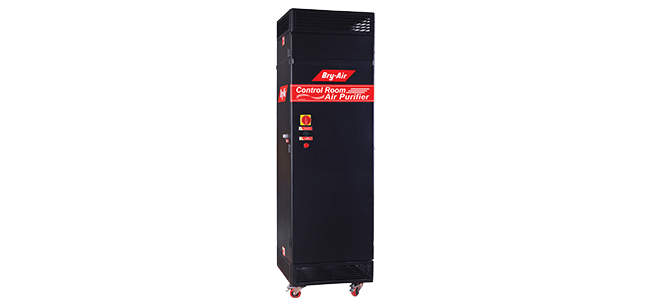
Honeycomb filter based gas phase filtration system (ranging from 500 CFM to 2000 CFM)
 view more
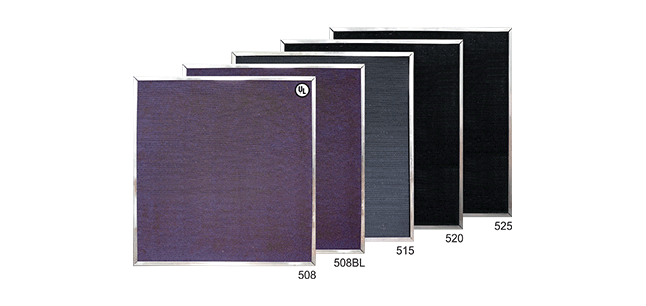
Macroporous desiccant-based fluted media with low pressure drop
view more
Let's
Get In
Touch