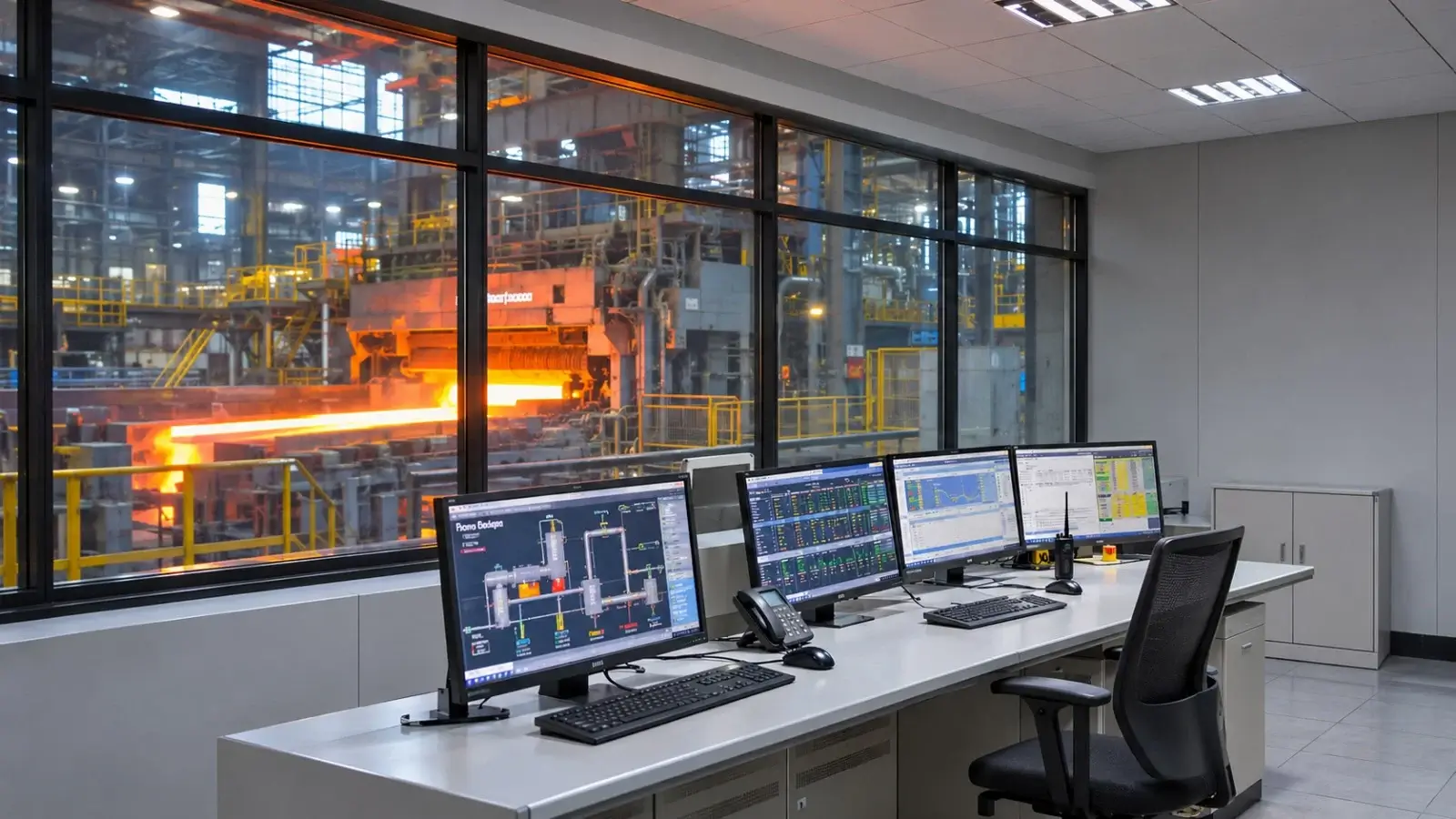
Iron and steel plants depend on reliable automation and control systems to maintain process stability, monitor equipment performance and support continuous production. However, the industrial environments surrounding steelmaking operations can expose sensitive electronic equipment to corrosive gases that may contribute to premature component deterioration and unplanned downtime.
While conventional HVAC systems regulate temperature and humidity, they do not necessarily remove gaseous contaminants. Without appropriate gas-phase filtration, contaminants entering control rooms, server rooms and electrical equipment spaces can pose a risk to programmable logic controllers (PLCs), distributed control systems (DCS), variable frequency drives (VFDs) and other critical electronics.
Bry-Air gas-phase filtration solutions help reduce targeted gaseous contaminants in critical equipment environments, supporting electronics reliability and more dependable plant operations.
Why Is Corrosive Air a Concern in Iron and Steel Plants?
Iron and steel manufacturing involves several processes that can generate gaseous contaminants, acid vapours and other airborne pollutants. Depending on the process configuration, fuel, raw materials and emission-control systems, these contaminants may affect the air surrounding electrical and electronic equipment.
The risk extends beyond the immediate production area. Outdoor air contaminated by industrial emissions can enter control rooms and electrical spaces through ventilation systems, outdoor air intakes, doors and other leakage pathways.
Maintaining the required room temperature and relative humidity does not, by itself, establish that the air is free from corrosive gases. Effective protection requires identifying the contaminants present and evaluating whether they can reach sensitive electronics.
Sources of Corrosive Gases in Steel Manufacturing
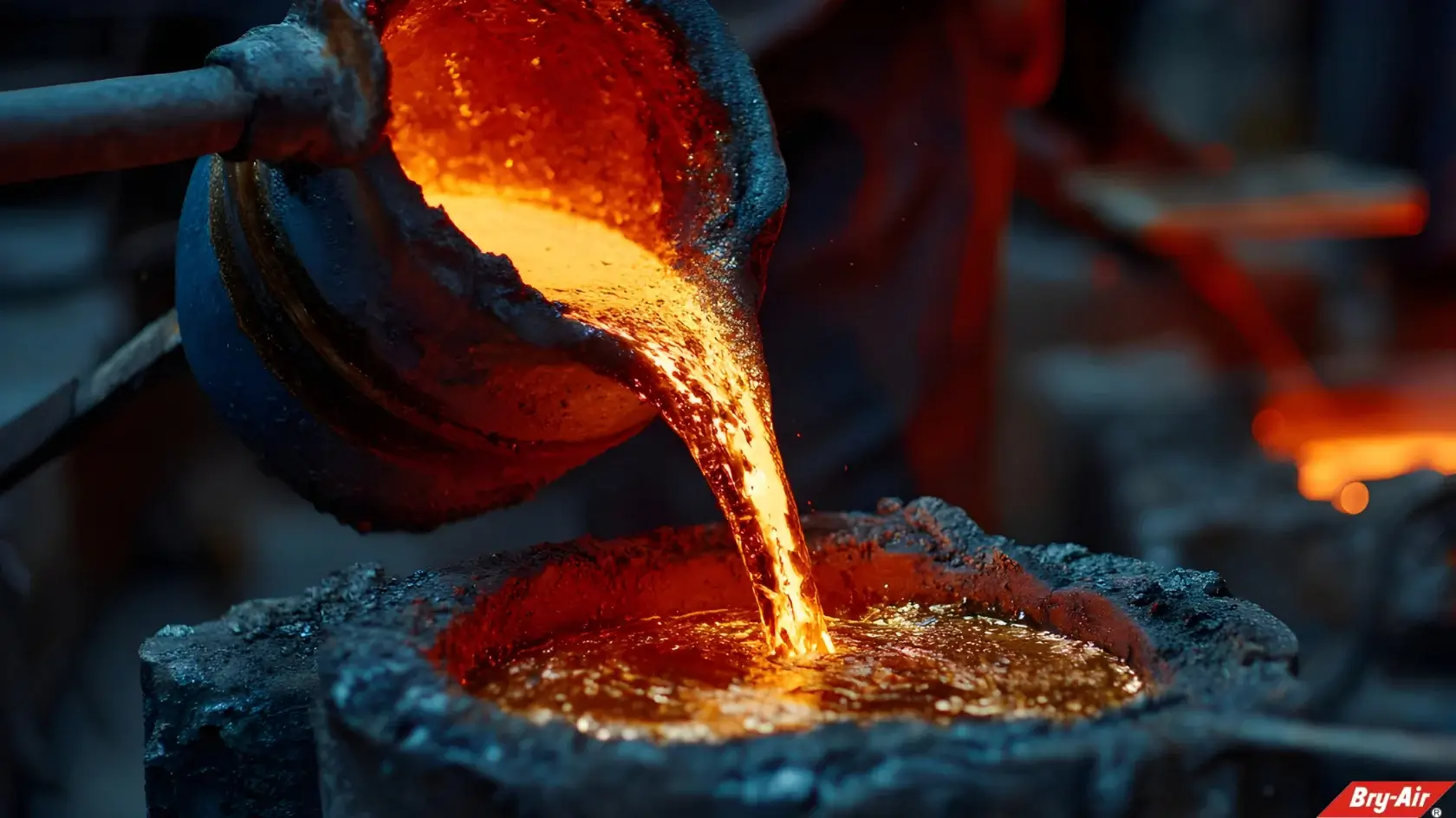
Different stages of iron and steel production can introduce contaminants into the surrounding environment. The actual gas composition and concentration depend on the plant’s operating conditions and process controls.
1. Coke Oven Operations
Coke production involves heating coal in the absence of oxygen. Coke oven gas can contain hydrogen sulphide (H₂S), ammonia (NH₃) and other process-related compounds. Leaks, handling systems and associated process areas may create potential contaminant sources near electrical infrastructure.
2. Sinter Plants
Sintering operations can generate sulphur oxides (SOₓ), nitrogen oxides (NOₓ) and particulate emissions, depending on the raw materials, fuel and emission-control arrangements. These contaminants may affect nearby building air intakes if they are not adequately controlled.
3. Blast Furnaces and Steelmaking Areas
Blast furnaces, basic oxygen furnaces and other steelmaking operations produce process gases and combustion-related emissions. Their composition varies with the process and operating conditions. Where contaminants migrate towards control rooms or electrical spaces, an assessment of indoor air quality may be necessary.
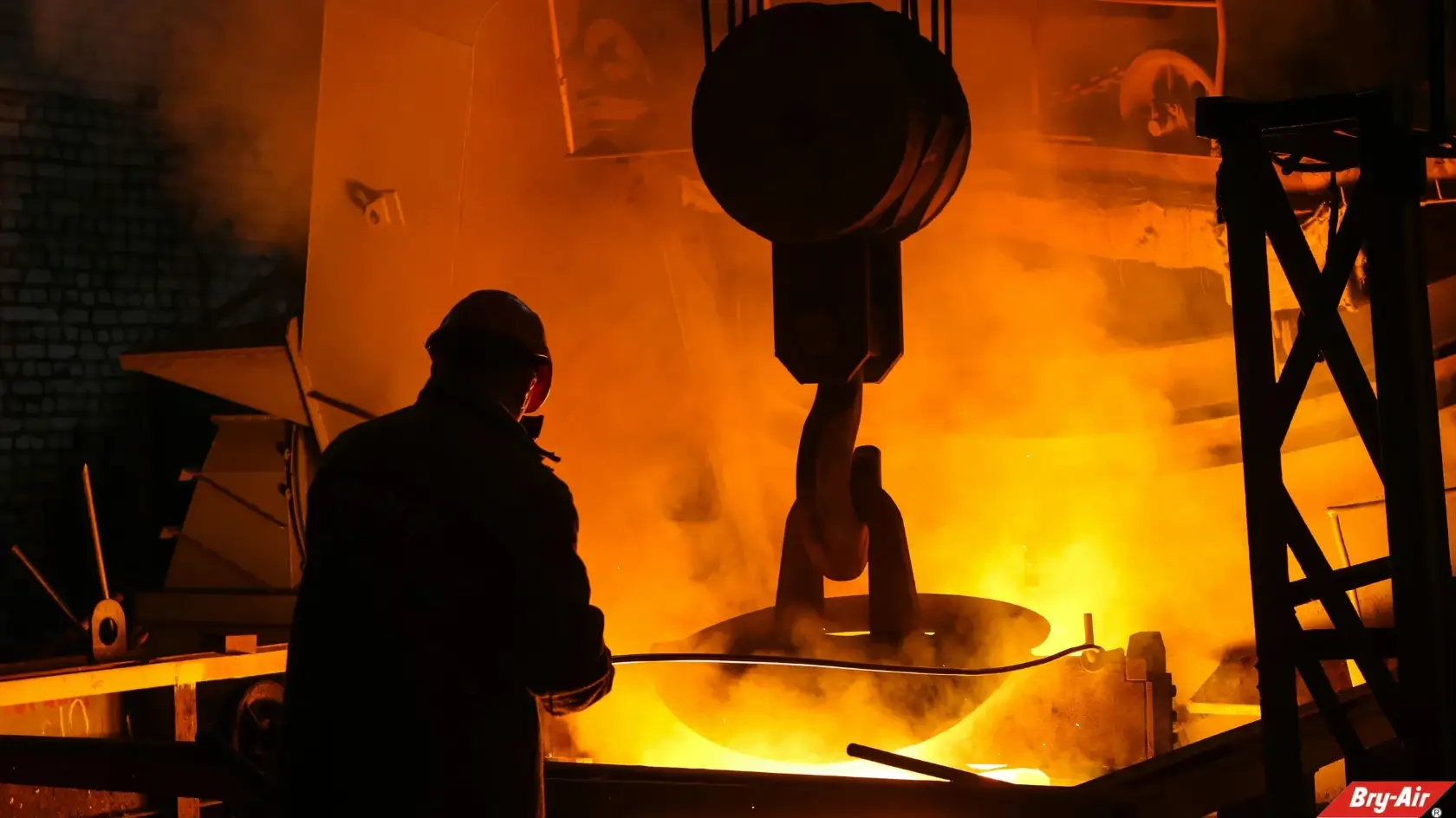
4. Annealing Furnaces
Annealing processes use controlled furnace atmospheres to achieve the required metallurgical properties. Depending on the fuel, protective atmosphere and process design, associated emissions or gas leaks may introduce contaminants into surrounding areas.
5. Pickling and Acid Regeneration Plants
Steel pickling removes oxide scale from metal surfaces using acids such as hydrochloric acid or sulphuric acid, depending on the process. Acid vapours and mists may be generated during handling and treatment. Acid regeneration systems may also involve corrosive vapours or process gases, depending on the technology used.
6. Galvanizing Operations
Galvanizing lines can generate process-related fumes and airborne contaminants depending on the coating method, flux chemistry and materials handled. Their potential impact on nearby electronics depends on the source, containment, ventilation and contaminant transport pathways.
7. Utility and Auxiliary Areas
Boiler houses, power generation systems, wastewater treatment facilities and other utility areas may contribute combustion-related or process-specific contaminants. Outdoor pollution can also enter electrical rooms through ventilation systems and building leakage.
Important: The presence of a particular process does not automatically establish that a nearby control room has a corrosive atmosphere. Gas measurements, corrosion monitoring and an assessment of ventilation pathways help determine the actual risk.
How Do Corrosive Gases Affect Critical Electronics?
Corrosive gases can react with susceptible metals used in electronic assemblies, including copper circuit-board tracks, silver contacts and metallic connectors. Under suitable conditions, moisture can accelerate these reactions.
Over time, corrosion may increase electrical contact resistance, damage conductive paths and interfere with the reliable operation of electronic components.
Equipment potentially affected in steel plants includes:
- Distributed Control Systems (DCS)
- Programmable Logic Controllers (PLC)
- Supervisory Control and Data Acquisition (SCADA) systems
- Variable Frequency Drives (VFDs)
- Motor Control Centres (MCCs)
- Protection relays and switchgear controls
- Server and network infrastructure
- Process analysers and instrumentation systems
- Uninterruptible Power Supply (UPS) monitoring and control electronics
Depending on the component affected and the role of the equipment, electronic deterioration can result in troubleshooting, component replacement, process interruptions or unplanned maintenance.
For steel plants operating continuous production lines, maintaining the reliability of these systems is an important part of operational risk management.
HVAC and Particulate Filtration vs. Gas-Phase Filtration
Conventional HVAC systems are designed primarily to provide ventilation and maintain indoor environmental conditions. Particulate filters capture particles according to their filtration characteristics, but they are not necessarily designed to remove gaseous contaminants.
Gas-phase filtration addresses a different requirement by using application-specific chemical media to remove targeted gaseous contaminants from an airstream.
| System | Primary Function | Limitation to Consider |
|---|---|---|
| HVAC system | Regulates temperature, humidity and ventilation | Does not necessarily remove gaseous contaminants |
| Particulate air filter | Captures airborne particles | Standard particulate filtration is not designed to remove all gaseous pollutants |
| Gas-phase filtration | Uses chemical media to remove targeted gaseous contaminants | Media selection must match the contaminants and operating conditions |
For critical control rooms and electrical equipment spaces, gas-phase filtration can complement HVAC and particulate filtration where corrosive gaseous contaminants have been identified.
Understanding Atmospheric Corrosivity: ISA G1 to GX
ANSI/ISA-71.04 provides a framework for classifying atmospheric corrosivity in environments containing electronic equipment. The classification helps engineering and maintenance teams assess whether the surrounding atmosphere may contribute to electronic corrosion.
The commonly referenced classes are:
| ISA Class | Corrosivity Level | General Interpretation |
|---|---|---|
| G1 | Mild | Low atmospheric corrosivity under the classification criteria |
| G2 | Moderate | Moderate corrosivity that warrants attention to equipment exposure |
| G3 | Harsh | High corrosivity with an increased risk of damage to susceptible electronics |
| GX | Severe | Very high corrosivity requiring stringent environmental and equipment-protection measures |
The classification should be established using appropriate assessment methods rather than inferred from the type of industrial process alone.
For iron and steel plants, corrosion coupons, suitable monitoring instruments and relevant atmospheric measurements can help establish the corrosivity of a control room or electrical equipment space. The results can inform decisions about filtration, ventilation and ongoing monitoring.
Bry-Air Gas-Phase Filtration Solutions for Iron and Steel Plants
Bry-Air offers gas-phase filtration solutions that use chemical media to remove targeted gaseous contaminants from air. The appropriate system depends on the contaminant profile, airflow requirements, room configuration, operating conditions and required performance.
1. BryShield MCU Series: Compact Protection for Control Rooms
The BryShield MCU Series is a compact air-purification option for suitable control rooms and electronic equipment spaces where targeted gaseous contaminant removal is required.
Potential applications:
- PLC and DCS rooms
- SCADA and instrumentation rooms
- Server rooms
- Selected electrical equipment spaces
2. EcoScrub Deep Bed: Gas-Phase Filtration for Higher Airflow Requirements
EcoScrub Deep Bed uses a bed of granular chemical media to remove targeted gaseous contaminants from the airstream. It can be considered for suitable applications requiring higher airflow and fresh-air pressurization.
Potential applications:
- Main control rooms
- Large electrical control areas
- Centralized automation facilities
System selection requires an assessment of airflow, contaminant concentrations, media requirements and the room’s ventilation design.
3. EcoScrub Thin Bed: Space-Efficient Gas-Phase Filtration
EcoScrub Thin Bed provides a modular gas-phase filtration option for applications where available installation space is a consideration.
Potential applications:
- VFD rooms
- Protection relay rooms
- Local electrical rooms
- Compact control and instrumentation areas
4. Control Room Air Purifier: Targeted Air Treatment
Bry-Air Control Room Air Purifier solutions are designed to help reduce targeted gaseous contaminants in suitable electronic equipment environments.
Potential applications:
- Instrumentation rooms
- Control rooms
- Selected electrical and electronic equipment spaces
The final configuration should be determined by the application, contaminant profile, required airflow and site conditions.
Case Study: Bry-Air Gas-Phase Filtration at JSW Steel, Dolvi Plant
The Coke Oven Division at JSW Steel’s Dolvi plant experienced electronic card failures and visible corrosion associated with coke oven gas (COG) exposure. Atmospheric testing identified corrosive conditions in the affected environment.
To address the risk in newly constructed server rooms, the project involved installing two Bry-Air DAP-500-4 units with four-stage honeycomb chemical media .
The reported post-installation results included:
- No reported electronic failures following installation.
- ISA G1 classification achieved within 90 days , according to the supplied case-study information.
- Reduced need for emergency electronic repairs.
- Additional consideration of gas-phase filtration for other critical areas.
This application demonstrates how gas-phase filtration can form part of a broader strategy to protect critical electronics in steel plant environments.
Project results are specific to the reported installation. Actual performance depends on the contaminant profile, system design, operating conditions, maintenance and monitoring.
How to Assess Corrosion Risk in a Steel Plant
A structured assessment helps determine whether gas-phase filtration is appropriate and which system configuration may be suitable.
Step 1: Identify Critical Equipment
Map the locations of DCS, PLC, SCADA, VFD, MCC, relay, server and instrumentation systems. Prioritise areas where electronic failures have occurred or where process continuity depends on reliable control equipment.
Step 2: Identify Potential Contaminant Sources
Review coke oven operations, sinter plants, furnaces, pickling lines, chemical handling areas, utility systems and nearby industrial sources. Consider the locations of outdoor air intakes and possible contaminant entry pathways.
Step 3: Assess Atmospheric Corrosivity
Use appropriate gas measurements and corrosion-monitoring methods to evaluate the atmosphere around critical electronics. Where relevant, assess the environment against the applicable ANSI/ISA-71.04 classification criteria.
Step 4: Evaluate the Existing HVAC System
Review ventilation rates, fresh-air intake locations, room pressurization, air leakage and existing filtration. Determine whether gaseous contaminants can enter or accumulate in protected spaces.
Step 5: Select the Appropriate Gas-Phase Filtration System
Match the filtration technology and chemical media to the contaminants identified. Consider airflow, pressure drop, room requirements, media service life and maintenance access.
Step 6: Monitor Performance and Media Condition
Continue monitoring atmospheric corrosivity and inspect the filtration system according to the application requirements. Establish a suitable maintenance and chemical media replacement programme to help sustain performance.
Protect Critical Electronics in Your Iron and Steel Plant
Corrosive gases can pose a reliability risk to electronic equipment even when conventional HVAC systems maintain the required room temperature and humidity. Identifying the contaminants, assessing atmospheric corrosivity and selecting suitable gas-phase filtration can help plants develop a more informed approach to protecting critical control systems.
Bry-Air can help evaluate gas-phase filtration requirements for suitable control rooms, server rooms and electrical equipment spaces in iron and steel facilities.
Contact Bry-Air to discuss gas-phase filtration for your steel plant.
Frequently Asked Questions
1. What is gas-phase filtration in the iron and steel industry?
Gas-phase filtration is an air-treatment process that uses chemical media to remove targeted gaseous contaminants from an airstream. In steel plants, it can help reduce exposure of sensitive electronics to corrosive gases in control rooms, server rooms and electrical equipment spaces.
2. Which corrosive gases can affect electronics in steel plants?
Potential contaminants include hydrogen sulphide (H₂S), sulphur dioxide (SO₂), nitrogen oxides (NOₓ), ammonia (NH₃) and other process-specific gases or vapours. The actual contaminants depend on the plant’s processes, materials, operating conditions and pollution-control systems.
3. Can conventional HVAC systems protect electronics from corrosive gases?
Not necessarily. HVAC systems primarily manage ventilation, temperature and humidity. Standard particulate filters are not designed to remove all gaseous contaminants. Where corrosive gases are present, gas-phase filtration may be required as a complementary air-treatment measure.
4. What is the ISA G1 classification for control rooms?
ISA G1 is the mild atmospheric corrosivity classification under ANSI/ISA-71.04. It indicates a comparatively low-corrosivity environment according to the standard’s criteria. Classification should be established through suitable assessment and monitoring, rather than assumed from the presence of filtration equipment.
5. Which Bry-Air products can be considered for steel plant control rooms?
Depending on the application, Bry-Air solutions may include the BryShield MCU Series, EcoScrub Deep Bed, EcoScrub Thin Bed and Control Room Air Purifier. The appropriate system depends on airflow, contaminant concentrations, room layout and the required level of protection.
6. How often should gas-phase filtration chemical media be replaced?
Replacement frequency depends on the contaminant loading, media type, operating conditions and remaining media capacity. Periodic media assessment and performance monitoring can help determine when replacement is necessary. A fixed replacement interval should not be applied universally without considering the application.
Recent Posts