
How dry room specification is shifting from meeting today’s requirement to enabling tomorrow’s chemistry
In battery development, the dry room is often treated as a supporting utility — a controlled space that exists to serve the process housed inside it. That framing is increasingly out of step with the direction the industry is taking.
As development moves beyond conventional lithium-ion towards next-generation chemistries, the environment itself is becoming a determining factor in what a facility can and cannot do. Nowhere is this clearer than in a single specification now appearing in advanced R&D briefs: a −70°C dew point dry room capability.
For teams accustomed to designing around the long-established −40°C benchmark, that is a substantial shift. It is worth understanding what is driving it — and why it is a question of capability rather than simply a colder number.
−40°C: A Benchmark Built Around Conventional Lithium-Ion
For conventional lithium-ion manufacturing, −40°C dew point has served as the industry reference point. It reflects the moisture sensitivity of established lithium-ion chemistry, and facilities designed to it have supported the technology through its commercial scale-up.
That benchmark remains entirely valid for the chemistry it was set around. The difficulty arises when it is carried forward, unexamined, into facilities whose purpose is to develop chemistries that did not exist when the benchmark was established.
A production line has a defined product. A research facility, by definition, does not.
Where a Conventional Benchmark Reaches Its Limit
Emerging solid-state technologies behave differently from conventional lithium-ion where moisture is concerned. Sulfide-based solid electrolytes in particular — the material at the centre of most solid state battery dry room requirements — show substantially greater sensitivity to trace moisture than the chemistry the −40°C benchmark was built around.
This is not a marginal difference in tolerance. It changes what the environment has to deliver.
What Trace Moisture Does to Sulfide Solid Electrolytes
Where sulfide-based solid electrolytes are exposed to moisture, the consequences are material rather than cosmetic:
- Degradation of the electrolyte itself
- Loss of ionic conductivity
- Impact on interfacial stability
- Generation of H₂S in some sulfide systems
Each of these strikes at the properties the material is being developed for. A solid electrolyte that has lost ionic conductivity is no longer the material under test — and in a research environment, that does not merely produce a defective cell. It produces unreliable data.
This is the distinction that matters most in an R&D setting. In manufacturing, moisture exposure costs yield. In research, it can cost the validity of the work itself, and the cause may not be obvious until considerable effort has been invested.
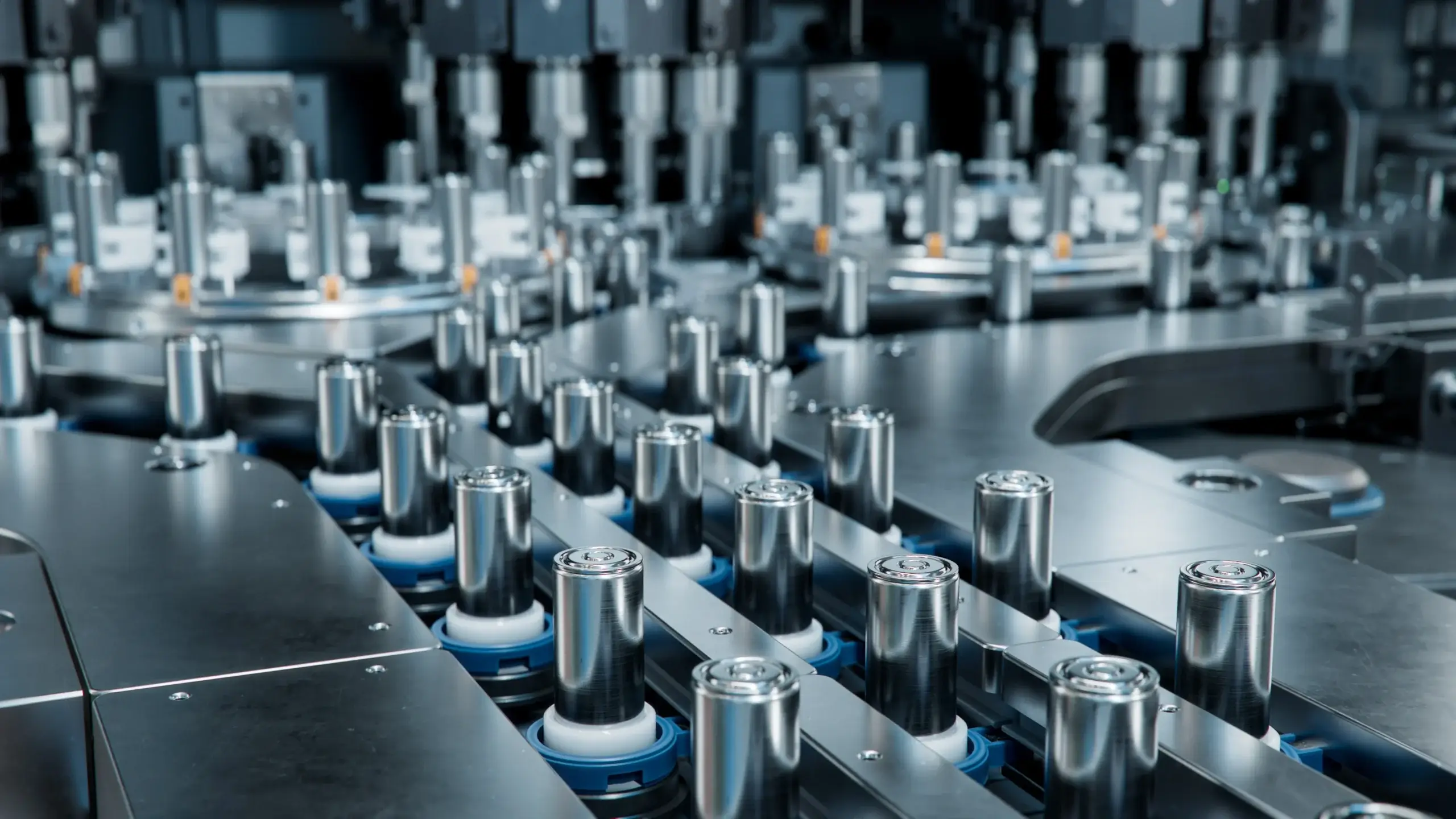
Chemistry Independence: Designing for What Is Not Yet Known
A battery R&D dry room facility is not built to make one product. It is built to support multiple chemistries — including chemistries whose moisture sensitivities are not yet fully characterised, and which may change as development progresses.
That creates a specification problem that a manufacturing facility does not face. A dry room designed narrowly around the requirements of today’s programme risks becoming a constraint on tomorrow’s. When that happens, the research agenda begins to be shaped by the building rather than by the science.
Specifying −70°C capability addresses this directly. It prevents the dry room from becoming the limitation on future research, and it means a new chemistry can be brought into the facility without first establishing whether the environment can accommodate it.
This is what chemistry independence means in practice: the environment stops being a variable in the programme.
Capability Is Not the Same as Condition
An important clarification often gets lost in this conversation. Specifying a −70°C-capable facility is not the same as committing to operate every space at −70°C at all times.
What the capability provides is:
- Additional moisture-control margin, so the environment is not operating at the edge of its ability
- Process flexibility, so different programmes with different sensitivities can run in the same facility
- Headroom for chemistries that prove more moisture-sensitive than anticipated
Margin, in any engineered environment, is what separates a specification that is met on a commissioning day from one that holds through years of real operation — through varying occupancy, changing external conditions, material transfers and maintenance activity.
A facility built with no margin has to be right about the future. A facility built with margin does not.
What This Means for Dry Room Design
As the target dew point deepens, the dry air system moves from a supporting role to a defining one. The environmental performance of the facility and the capability of the dehumidification system supporting it become effectively the same question.
At this level of moisture control, the dry room can no longer be specified as an afterthought to the architecture. It has to be engineered as the primary function of the space, with the environmental requirement established at the outset rather than accommodated later.
Bry-Air: Engineering Environments for What Comes Next
Bry-Air has spent over six decades developing adsorption-based dehumidification for applications where moisture control is not a comfort consideration but a process requirement — including dry rooms for lithium battery manufacturing, pharmaceuticals, electronics and other environments where trace moisture determines outcomes.
That experience is directly relevant to where battery development is heading. The requirement emerging from advanced R&D is not simply for drier air. It is for environments that can support work not yet fully defined, and that will not have to be rebuilt when the chemistry changes.
Looking Ahead
The case for −70°C dew point is not an argument for making a conventional battery dry room drier. It is an argument for building an environment capable of supporting the next generation of battery technologies.
Conventional lithium-ion manufacturing operates comfortably around −40°C. Emerging solid-state technologies — sulfide-based solid electrolytes in particular — do not share that tolerance, and the chemistry a facility is developing today may prove considerably more moisture-sensitive than the chemistry it was designed around.
A −70°C-capable environment provides the moisture-control margin and the process flexibility that advanced battery research needs. It is, in the end, a decision about whether the facility is built for the work being done now, or for the work that will be done in it next.
To discuss dry room environmental requirements for advanced battery research, Contact an Airgineer.
FAQs
1. What is a −70°C dew point dry room?
A −70°C dew point dry room is a controlled environment designed to maintain extremely low moisture levels for applications where conventional −40°C dew point conditions may not provide sufficient moisture-control margin.
2. Why does battery R&D require a low dew point environment?
A battery R&D dry room provides the controlled moisture conditions needed to protect moisture-sensitive materials and support reliable testing across different battery chemistries during research and development.
3. Why is a −70°C dew point important for solid-state batteries?
A solid state battery dry room can provide the additional moisture-control capability required for emerging solid-state chemistries, particularly those using moisture-sensitive sulfide-based solid electrolytes.
4. How does moisture affect sulfide-based solid electrolytes?
Moisture can degrade sulfide-based solid electrolytes, affect ionic conductivity and interfacial stability, and may result in H₂S generation in some systems. Effective sulfide electrolyte moisture control helps protect material performance during battery development.
5. Is a −70°C-capable dry room always operated at −70°C?
No. A −70°C dew point dry room provides additional moisture-control capability and operational headroom. The facility does not necessarily need to operate every space at −70°C at all times.
6. How does a battery R&D dry room support future battery chemistries?
A battery R&D dry room designed with sufficient moisture-control capability provides flexibility to work with different and potentially more moisture-sensitive chemistries, helping prevent the facility environment from becoming a limitation on future research.
Recent Posts