Our Airgineers Can Help You Select The Right Product!
Contact Us
Our Airgineers Can Help You Select The Right Product!
Contact Us
Corrosive gases can enter control rooms through ventilation systems, door gaps, cable penetrations and pressurisation leaks. Over time, these contaminants can corrode sensitive electronic components and affect the reliability of control systems.
Critical equipment can include DCS, PLC, SCADA systems, protection relays, VFD control boards, MCCs, UPS systems, process analyzers and instrumentation electronics. Corrosion can affect contacts, circuit boards, terminals and other sensitive components.
Corrosion can be caused by gaseous contaminants such as hydrogen sulfide (H₂S), sulfur dioxide (SO₂), chlorine (Cl₂), ammonia (NH₃), nitrogen oxides and other reactive gases. Their impact can increase in the presence of moisture and suitable environmental conditions.
Atmospheric corrosivity can be assessed using Corrosion Classification Coupons or monitored in real time using an Atmospheric Corrosivity Monitor (ACM). Corrosion Classification Coupons use standardized 30-day copper and silver exposure, while ACM provides continuous monitoring of atmospheric corrosivity.
ANSI/ISA S71.04 provides a classification framework for airborne corrosivity in environments containing electronic equipment. The classification is based on corrosion rates measured using copper and silver coupons, with environments categorized from G1 (mild) to GX (severe).
Gas-phase filtration removes gaseous contaminants from the air using technologies such as activated carbon, chemically impregnated carbon and specialized adsorbent media. Unlike conventional particulate filters, gas-phase filtration is designed to address gaseous contaminants that can contribute to electronic corrosion.
Gas-phase filtration can help reduce exposure of control-room electronics to corrosive gaseous contaminants by treating the air entering or circulating within the protected space. This can be relevant for equipment such as DCS, PLC, SCADA, VFDs, protection relays and other electronic systems.
A practical approach is to first assess the environmental corrosivity using corrosion coupons or an Atmospheric Corrosivity Monitor. The results can then be used to understand the corrosion environment and determine whether additional gas-phase filtration or other protective measures should be considered.
Our Airgineers Can Help You Select The Right Product!
Contact Us
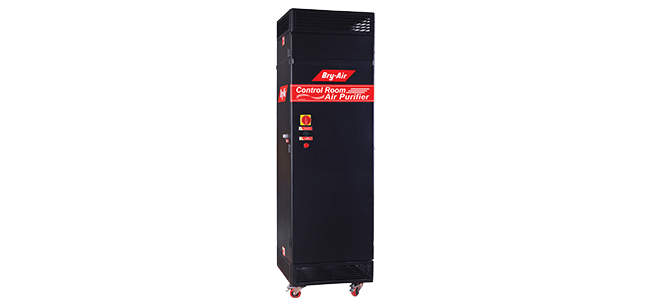
Honeycomb filter based gas phase filtration system (ranging from 500 CFM to 2000 CFM)
 view more
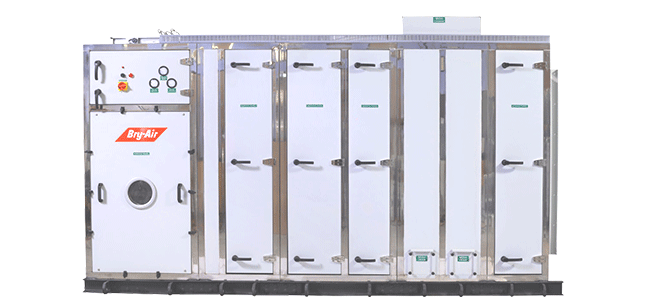
Granular media based corrosive gases and odour removal system (ranging from 500 CFM to 2000 CFM, with higher capacities available on request)
view more
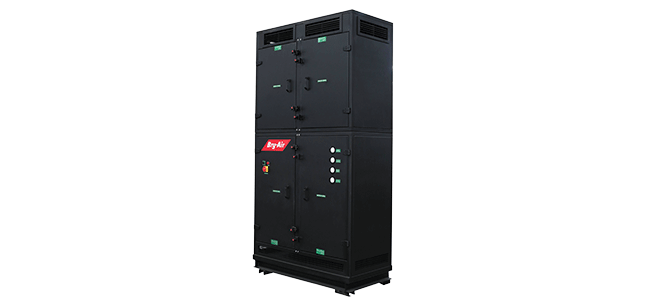
Granular media based corrosive and odorous gases removal system (ranging from 500 CFM to 2000 CFM, with higher capacities available on request)
view more
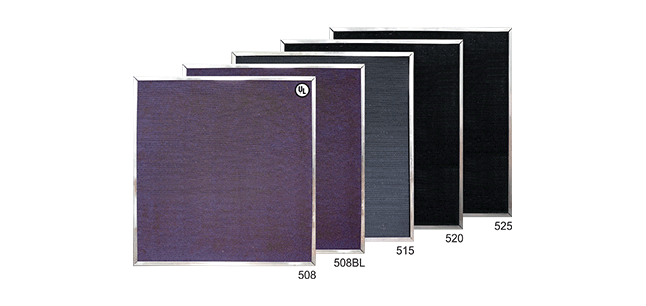
Macroporous desiccant-based fluted media with low pressure drop
view more
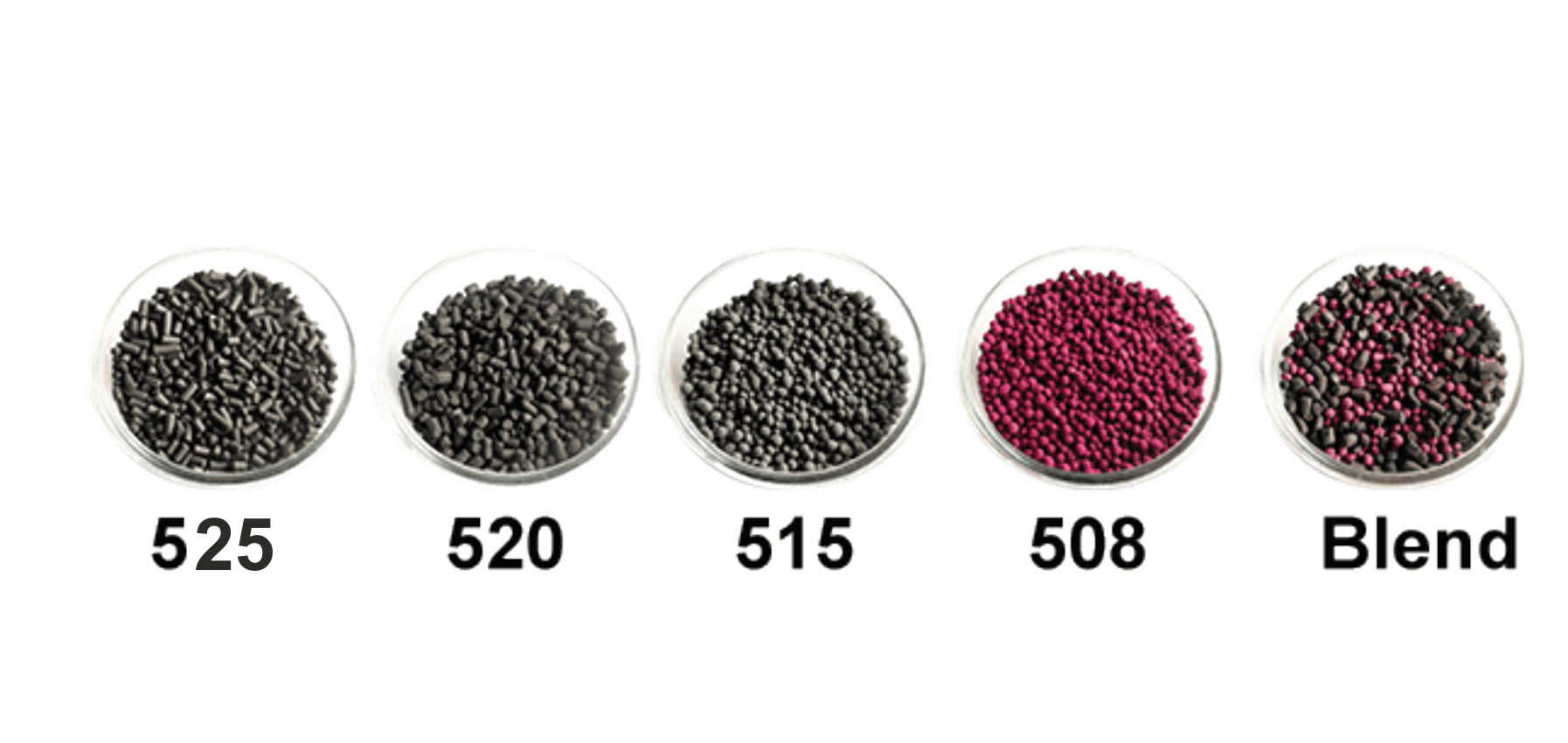
Spherical / Cylindrical porous pellets impregnated with proprietary chemicals
view more
Let's
Get In
Touch