Our Airgineers Can Help You Select The Right Product!
Contact Us
Our Airgineers Can Help You Select The Right Product!
Contact Us
Corrosive gases and airborne contaminants can enter data centers through fresh-air intakes, ventilation systems, air-side economizers and building leakage points. In combination with humidity, these contaminants can contribute to corrosion and degradation of sensitive electronic equipment.
Potential contaminants include sulfur compounds, nitrogen oxides, chlorine compounds, ammonia, VOCs, marine salts and other airborne molecular contaminants. Their presence and impact depend on the surrounding environment and facility location.
Sensitive equipment can include servers, network switches, storage systems, UPS systems, BMS equipment, communication modules, control electronics and other electronic assemblies. Corrosive contamination can affect connectors, contacts, PCBs and other components.
High humidity can accelerate the effects of airborne contaminants on electronic surfaces. In coastal and tropical environments, the combination of humidity and contaminants such as salt aerosols can create conditions that accelerate corrosion and increase electrical leakage risks.
Yes. Data centers located near coastlines or ports can be exposed to marine salt aerosols. Salt deposits can attract moisture and contribute to corrosion of electronic surfaces, connectors and terminals.
Atmospheric corrosivity can be assessed using Corrosion Classification Coupons or monitored continuously using an Atmospheric Corrosivity Monitor (ACM). These approaches help establish or track the corrosive conditions surrounding critical equipment.
ANSI/ISA S71.04 provides a framework for classifying atmospheric corrosivity in environments containing electronic equipment. Copper and silver corrosion measurements are used to assess the corrosivity level, ranging from G1 (mild) to GX (severe).
Gas-phase filtration is designed to remove gaseous contaminants from air using activated carbon, chemically impregnated carbon and specialized adsorbent media. It addresses gaseous contaminants that conventional particulate filtration does not remove.
HEPA filtration is primarily intended for particulate filtration. It does not address gaseous contaminants that can contribute to atmospheric corrosion. Where corrosive gases are a concern, gas-phase filtration may be required as an additional layer of protection.
The first step is to assess the site’s environmental conditions and potential sources of airborne contaminants. Corrosion monitoring using coupons or an Atmospheric Corrosivity Monitor can help establish the corrosivity level and inform the need for additional protection.
Our Airgineers Can Help You Select The Right Product!
Contact Us
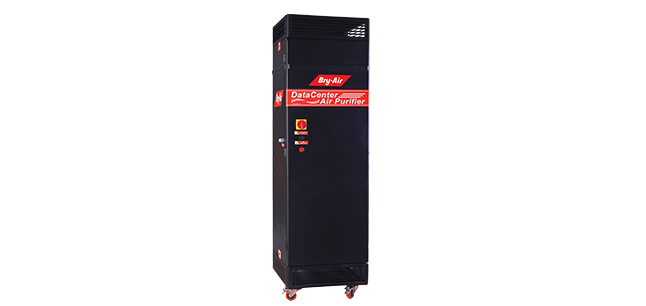
Honeycomb filter based gas phase filtration system (ranging from 500 CFM to 2000 CFM)
 view more
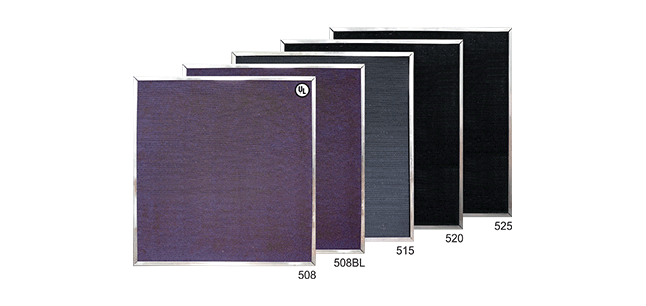
Macroporous desiccant-based fluted media with low pressure drop
view more
Let's
Get In
Touch