Reliability, Reimagined for a Water Uncertain World

The world has entered what the United Nations now calls a “water-bankrupt era”. Cities are running dry. Aquifers are depleting. Reservoirs are shrinking. The scale of the crisis is unprecedented. And for the first time in history, “where will tomorrow’s water come from” is a question being asked by governments, industries and communities alike – from Cape Town to Kabul, from São Paulo to the semiconductor fabs of Arizona.
Bry-Air has the answer – 62 years of adsorption science experience.
Engineering Water Independence: Bry-Air’s Pioneering Achievement
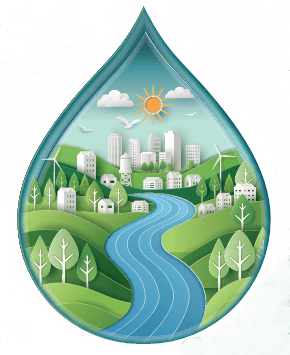
Bry-Air’s Air Water Generator produces potable water directly from ambient air.
No pipeline
No borewell
No tanker
Turning air into water. Anywhere, any climate, any scale.
At its heart is a desiccant rotor – the same adsorption chemistry Bry-Air has mastered over 6 decades, now engineered for a new mission.
The Result:
A modular, containerised system that scales from 55 litres per day at commercial scale to nearly 14 million litres per year at industrial capacity, powered by the lowest watts-per-litre performance in its class.
It works in arid regions. It works in low humidity. It runs continuously, unattended – with a rotor engineered for a decade of service without replacement.
72% of the global population – 5.52 billion people – live in water – insecure settings. The Bry-Air AWG is engineered to change that.
Did
You
Know?
You
Know?
Across industries. Across geographies.
One answer to the water question of our time. From off-grid resorts and remote industrial sites to pharmaceutical process water, agricultural irrigation, defence forward-areas, disaster relief camps, and of course data centres.
The AWG is redefining how the world’s most demanding operations secure their water future.
From Air to Water. From Bry-Air, to the World
55 litres/day
20,075 litres/year
20,075 litres/year

1,000 litres/day
365,000 litres/year
365,000 litres/year

1,600 litres/hour
13,778,899 litres/year
13,778,899 litres/year