Our Airgineers Can Help You Select The Right Product!
Contact Us
Our Airgineers Can Help You Select The Right Product!
Contact Us
Printing technologies from lithography to flexography share common challenges around energy use, air quality and temperature and humidity control. Humidity control helps printing industry plants protect paper and maintain process consistency year-round.
Paper is hygroscopic and expands or contracts with humidity, causing weak stencils, pinholing, sticking photopositives, lengthened drying and poor imaging. These issues are all linked to high humidity conditions.
Constant dry bulb temperature and relative humidity give a plate a known control point, with an optimum condition of 24 to 27°C and 45% RH. Proper platemaking humidity control also needs attention to air cleanliness and ventilation to limit chemical fumes and dust.
In digital printing, moisture affects toner adhesion, paper jams and fuser roller temperature. In offset, it affects ink-press, paper-press and ink-paper interaction, and inkjet is prone to dot gain, drying delays and ink show-through, so relief and offset printing humidity control must cover all three.
Recommended conditions are 25 to 27°C and 43 to 47% RH as ideal for printing. Paper exposed to temperatures well below room temperature after unwrapping rapidly absorbs moisture, distorting the sheet.
Bry-Air’s adsorption dehumidifying equipment offers independent humidity control with cooling provisions, using continuous physical adsorption by MSFM. Units range from compact false-ceiling models to engineered systems, all CNC fabricated with a powder-coated finish.
Our Airgineers Can Help You Select The Right Product!
Contact Us
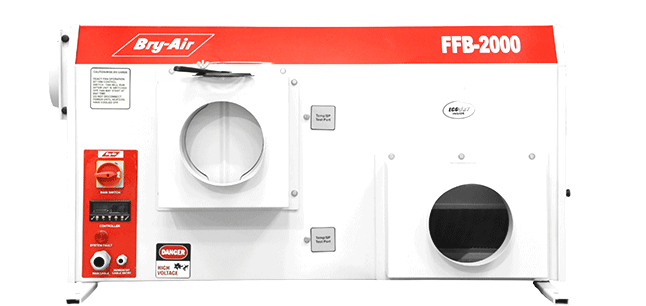
CNC fabricated with powder coated finish (ranging from 170 CMH to 4,500 CMH)
 view more
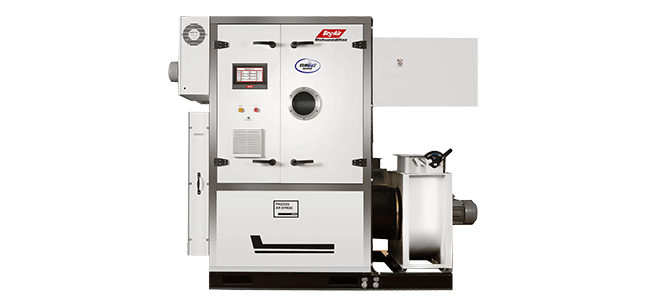
For complete air handling and environment control needs (ranging from 2,500 CMH to 25,000 CMH)
view more
Let's
Get In
Touch