Our Airgineers Can Help You Select The Right Product!
Contact Us
Our Airgineers Can Help You Select The Right Product!
Contact Us
Moisture control for food concentrate helps maintain product quality, prevent moisture-related issues such as lumping, caking, and mould growth, and support the shelf life of concentrated food products during processing, packaging, and storage
High humidity can cause food powders to absorb moisture, leading to sticking, clumping, and reduced flowability. Effective humidity control in food powder processing helps maintain consistent powder quality and smooth processing.
Pneumatic conveying humidity control involves managing the moisture content of air used to transport food powders through high-velocity airstream systems. Excess moisture can cause powders to become sticky or form lumps, leading to blockages and slower transport — controlled humidity helps minimise moisture absorption and maintain smooth powder flowability.
Airveying is another term for pneumatic conveying — the transport of granular or powdered materials through high-velocity air streams. Airveying moisture control maintains suitable moisture levels in this air to reduce moisture absorption and support smooth movement of powders through the system.
Dehumidification removes excess moisture from the air, helping maintain controlled conditions during powder processing. This can reduce moisture-related problems such as clumping, sticking, poor flowability, and unhygienic storage or transport conditions.
Exposure to humid air during packaging can cause food concentrates and powders to absorb moisture, potentially affecting their texture, flowability, and quality. Controlled humidity helps protect products during packaging and supports a longer shelf life
Yes. Maintaining controlled humidity during processing, conveying, packaging, and storage can help minimise moisture absorption and preserve the quality and stability of food concentrates.
Our Airgineers Can Help You Select The Right Product!
Contact Us
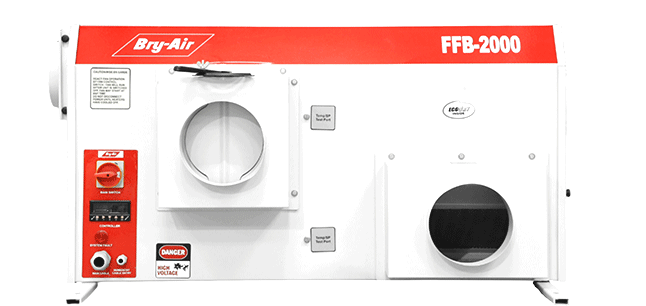
CNC fabricated with powder coated finish (ranging from 170 CMH to 4,500 CMH)
 view more
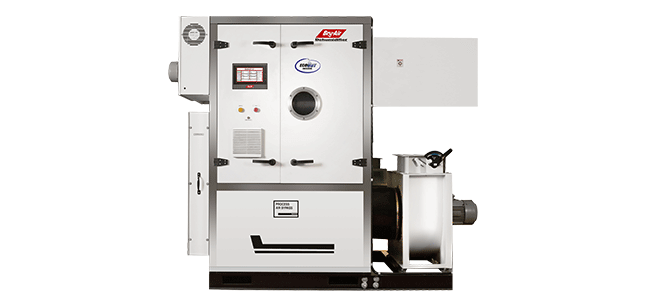
For complete air handling and environment control needs (ranging from 2,500 CMH to 25,000 CMH)
view more
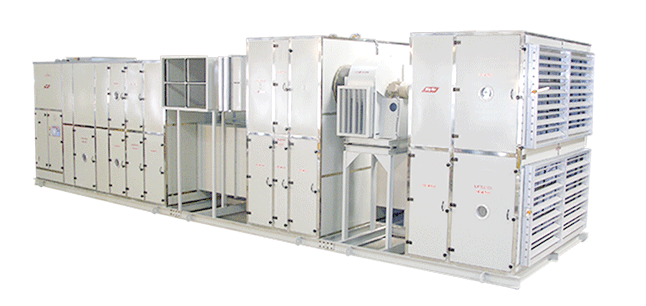
For custom design requirements (ranging from 10,000 CMH to 1,00,000+ CMH)
view more
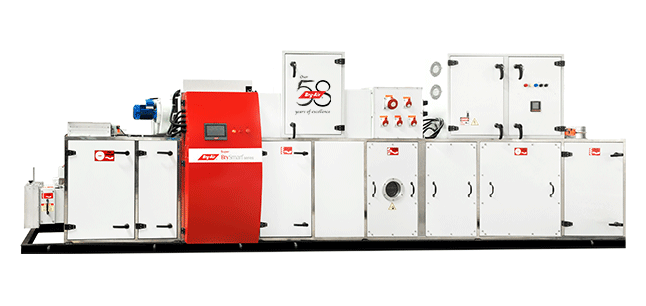
Highly optimized energy consumption (ranging from 10,000 CMH to 100,000+ CMH)
view more
Let's
Get In
Touch