In today’s industrial environment, energy efficiency, sustainability, and process reliability are no longer optional; they are critical business priorities. Many industries generate large amounts of low-grade process heat during production, power generation, heating, cooling, and other utility operations. In most cases, this heat is rejected into the atmosphere or discharged through cooling systems without being used effectively.
At the same time, these industries require continuous cooling for process applications, air-conditioning, and climate-controlled areas. This creates a clear opportunity: instead of allowing low-grade heat to go waste, it can be recovered and converted into useful cooling.
This is where adsorption chillers offer a meaningful advantage. By using low-grade waste heat as the driving source, adsorption chillers provide an energy-smart approach to industrial cooling while reducing dependence on electricity-intensive conventional cooling systems.
Understanding Adsorption Chillers
Adsorption chillers operate on a heat-driven cooling principle. Unlike conventional vapour compression systems that rely heavily on electrically driven compressors, adsorption chillers use hot water generated from low-grade process waste heat, solar thermal sources, engine jacket water, or turbine exhaust heat.
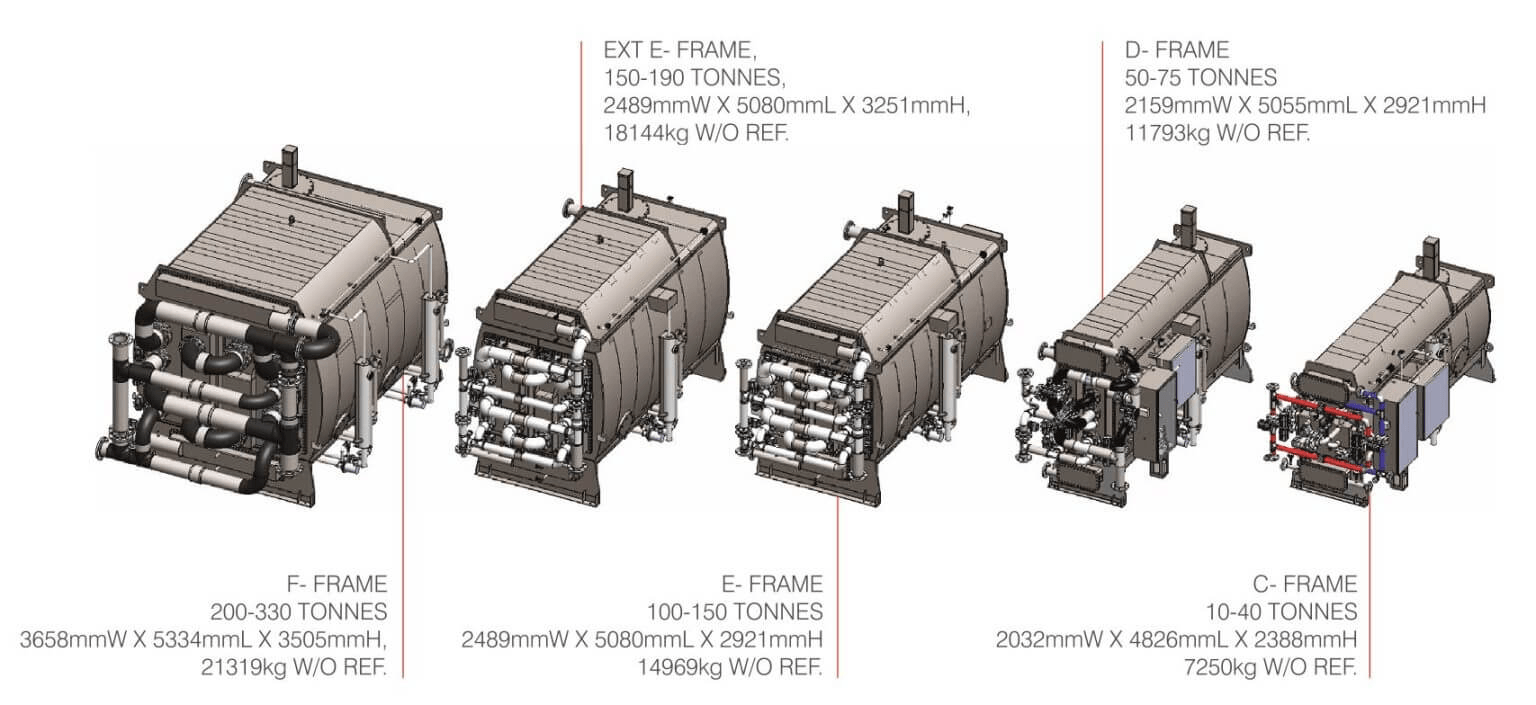
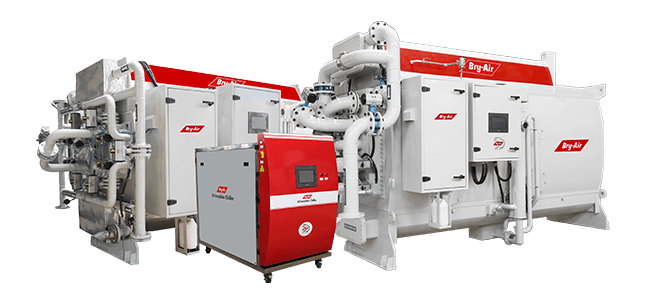
Bry-Air Adsorption Chillers are based on an advanced silica gel–water adsorption cycle, where:
- Silica gel acts as the adsorbent
- Water acts as the refrigerant
- Hot water or waste heat acts as the driving energy source
- Chilled water is produced for process cooling or air-conditioning
In simple terms, the system uses heat to regenerate the adsorbent bed. Water vapour is released, condensed, and then evaporated under low-pressure conditions. During evaporation, heat is absorbed, which produces the cooling effect and generates chilled water.
This makes adsorption chillers especially relevant for facilities where low-grade heat is already available and cooling demand exists throughout the process.
Why Waste Heat Recovery Matters in Industrial Cooling
Industrial operations often consume significant energy for cooling, while simultaneously rejecting usable heat from different process points. This creates a gap between energy generation, heat rejection, and cooling demand.
Low-grade waste heat may be available from sources such as:
- Boiler exhaust
- Boiler blowdown
- Condensate streams
- Process furnaces
- Product coolers
- Compressor interstage and aftercoolers
- Engine jacket water
- Turbine exhaust
- Solar thermal systems
In conventional operations, much of this heat is treated as a by-product. Adsorption chillers help convert this overlooked energy source into practical cooling output. This supports better energy utilization and helps reduce the electrical load associated with cooling.
How Adsorption Chillers Support Energy-Smart Cooling
The core benefit of adsorption chillers lies in their ability to use heat that would otherwise be wasted. Instead of adding more electrical demand to generate cooling, the system recovers available thermal energy and uses it to produce chilled water.
This approach helps industries:
- Reduce cooling-related electricity consumption
- Make better use of existing process heat
- Lower operating costs where suitable waste heat is available
- Reduce dependence on conventional mechanical cooling
- Support energy conservation and sustainability goals
Key Benefits of Adsorption Chillers
1. Utilization of Low-Grade Process Waste Heat
Adsorption chillers are designed to use low-grade heat, typically available in many industrial processes. Bry-Air Adsorption Chillers can use process waste heat in the range of 50°C to 100°C, making them suitable for applications where conventional heat recovery options may be limited.
This allows plants to put their waste heat to productive use instead of rejecting it through cooling towers or exhaust systems.
2. Ultra-Low Electricity Consumption
Since adsorption chillers are driven primarily by hot water or waste heat, their electrical consumption is significantly lower compared to systems that depend heavily on compressors. Electricity is mainly required for auxiliary components and controls, not for the main cooling generation mechanism.
3. Environment-Friendly Cooling
Bry-Air Adsorption Chillers use water as the refrigerant and inert silica gel as the adsorbent. This supports an environment-friendly cooling approach and reduces reliance on conventional refrigerants.
By using recovered heat and reducing electricity demand, adsorption chillers also contribute to lower CO₂ emissions associated with cooling operations.
4. Low Maintenance and Long Operating Life
Adsorption chillers are known for reliable operation with fewer mechanical complexities. Bry-Air’s positioning highlights benefits such as negligible maintenance, negligible noise and vibration, and a long operating life.
5. Suitable for Process Cooling and HVAC
Adsorption chillers can be used for both process cooling and air-conditioning applications, depending on the plant requirement. They produce chilled water that can support industrial cooling needs as well as climate-controlled spaces in commercial or institutional facilities.
Industrial Applications of Adsorption Chillers
Chemical Industry
Chemical plants generate low-grade heat from several process sources such as reflux condensers, condensate streams, product coolers, boiler exhausts, boiler blowdown, PRDS cooling, compressor interstage and aftercoolers, and process furnaces.
This heat can be recovered and used in adsorption chillers to generate chilled water for process cooling.
Food and Beverages
Food and beverage plants often generate heat from ovens, boilers, and diesel or gas engine jacket water. Instead of allowing this heat to go waste, it can be used as a heat source for adsorption chillers.
Power Plants
Power plants have multiple sources of recoverable heat, including boiler exhaust, boiler blowdown, boiler condensate, and PRDS-related heat. Adsorption chillers can use such heat sources to generate chilled water for cooling applications.
Pulp and Paper, Steel, Cement, Refineries, and General Industry
Industries such as pulp and paper, steel, cement, refineries, sugar, aluminium, automobile manufacturing, and general process industries often have both heat rejection points and cooling requirements.
Bry-Air’s Adsorption Chiller Advantage
- Silica gel–water adsorption technology
- Use of low-grade process waste heat
- Ultra-low electricity consumption
- Chilled water output for process cooling and HVAC
- Water as a green refrigerant
- Inert silica gel as the adsorbent
- Negligible noise and vibration
- Low maintenance requirement
- Long operating life
- Suitable for varied industrial and commercial applications
Integrating Adsorption Chillers into Industrial Cooling Systems
Adsorption chillers can be evaluated for integration with existing chilled-water or HVAC systems where suitable waste heat and cooling demand are available.
The success of integration depends on factors such as:
- Availability and temperature of waste heat
- Chilled water requirement
- Operating hours
- Process cooling demand
- Existing cooling infrastructure
- Energy cost and sustainability objectives
The Future of Energy-Smart Industrial Cooling
As industries focus more strongly on energy efficiency, carbon reduction, and sustainable operations, waste heat recovery will continue to gain importance.
Adsorption chillers offer a practical way to convert available thermal energy into useful cooling, helping industries reduce energy waste and improve cooling efficiency.
Conclusion
Adsorption chillers represent a smart and sustainable approach to industrial cooling. By using low-grade process waste heat to generate chilled water, they help industries reduce electrical cooling demand, lower energy expenses, and make better use of resources that would otherwise be wasted.
With advanced silica gel–water adsorption technology and deep expertise in industrial air treatment, Bry-Air continues to support industries with solutions that make cooling more efficient, reliable, and environmentally responsible.
Recent Posts