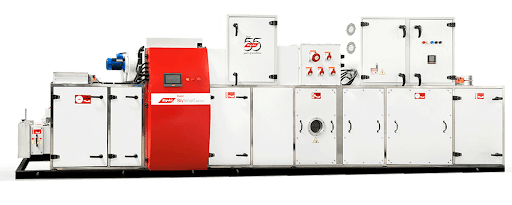
Humidity control is a critical requirement in many industrial environments. Excess moisture in the air can damage equipment, disrupt processes, and compromise product quality. Industrial dehumidification is essential because standard ventilation merely replaces indoor air with outdoor air, which can actually increase humidity levels if the ambient air prioritiseFurthermore, comfort-focused air conditioning systems prioritize temperature regulation over moisture removal, making them insufficient for achieving the precise, low-dew point conditions required in industrial applications.
Desiccant dehumidifiers play a central role in industrial dehumidification, with low-dew-point designs that deliver reliable moisture removal and low-dew-point air across a wide range of operating conditions. This blog explains what industrial dehumidification is, why it is essential, and how desiccant dehumidifiers work in real industrial applications.
Introduction
Industrial facilities generate and trap moisture in many ways. Ambient air infiltration, process heat, washing operations, and seasonal weather all contribute to rising humidity levels. When humidity is not controlled, it leads to condensation, corrosion, and operational inefficiencies.
Industrial dehumidification systems are designed specifically to manage these challenges. Unlike comfort systems that focus on temperature, industrial dehumidification focuses on precise moisture removal. Desiccant dehumidifiers are widely used because they can achieve stable humidity control even at low temperatures and low dew points.
Understanding how these systems work helps engineers, operators, and decision makers protect assets and ensure process reliability.
What Is Industrial Dehumidification
Industrial dehumidification is the controlled removal of moisture from air in industrial environments. The goal is to maintain relative humidity at levels suitable for equipment protection, product stability, and safe operations.
Industrial dehumidification differs from residential or commercial dehumidification in both scale and performance. Industrial systems are engineered to handle large air volumes, continuous operation, and demanding environmental conditions.
These systems are used wherever uncontrolled humidity can create risks. This includes manufacturing areas, storage facilities, clean environments, and process zones where moisture sensitivity is high.
Definition of Industrial Dehumidification
At its core, industrial dehumidification removes water vapour from air using engineered moisture removal technologies. The removed moisture is discharged safely, while the dried air is supplied back into the controlled space.
The result is consistent humidity control regardless of external weather conditions or internal moisture generation.
Why Industrial Dehumidification Is Essential
Uncontrolled humidity affects industrial operations in multiple ways.
High moisture levels can corrode metal surfaces and electrical components. They can also cause material degradation, microbial growth, and condensation on cold surfaces.
Industrial dehumidification prevents these issues by maintaining humidity within defined limits. This protects infrastructure, improves process consistency, and reduces long term maintenance costs.
Problems Caused by Excess Humidity
Excess humidity is not just an environmental issue. It is an operational risk.
Equipment and Infrastructure Damage
Moisture accelerates corrosion of machinery, pipelines, and structural elements. Electrical panels and control systems are particularly vulnerable to humidity related failures.
By controlling humidity, industrial dehumidification systems extend equipment life and improve reliability.
Process and Product Quality Issues
Many industrial processes depend on stable environmental conditions. Moisture can affect raw materials, intermediate products, and finished goods.
Humidity fluctuations can lead to clumping, sticking, degradation, or inconsistent results. Moisture removal ensures predictable process outcomes.
Safety and Operational Challenges
Condensation creates slippery surfaces and visibility issues. It also increases the risk of electrical faults and mould growth.
Industrial dehumidification reduces condensation risk and supports safer working environments.
Overview of Humidity Control Systems
Humidity control systems are designed to manage moisture levels inside enclosed or semi enclosed spaces.
What Are Industrial Humidity Control Systems
Industrial humidity control systems include dehumidifiers, air handling components, control panels, and sensors. Together, they monitor and regulate humidity levels continuously.
These systems are engineered to deliver consistent performance under varying loads and conditions.
Why Standard Ventilation Is Not Enough
Ventilation only replaces indoor air with outdoor air. It does not remove moisture.
When outdoor air is humid, ventilation can increase indoor humidity. Industrial dehumidification actively removes moisture and provides predictable control independent of ambient conditions.
What Is a Desiccant Dehumidifier
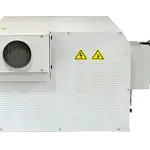
A desiccant dehumidifier is a device that removes moisture from air using hygroscopic materials. These materials have a strong affinity for water vapour.
Desiccant dehumidifiers are widely used in industrial dehumidification because they can achieve low dew point air and stable performance across temperature ranges.
Basic Principle of Desiccant Dehumidification
Desiccant dehumidification works through adsorption. Moist air passes over a desiccant surface. Water vapour is attracted to and held by the desiccant.
The dried air is then supplied to the controlled space, while the moisture is removed during a separate regeneration process.
Key Components of a Desiccant Dehumidifier
A typical desiccant dehumidifier includes:
- A desiccant rotor or bed
- Process air fan
- Regeneration air system
- Heating source for regeneration
- Control and monitoring system
Each component plays a role in continuous moisture removal.
Desiccant Dehumidifier Working Explained
Understanding desiccant dehumidifier working helps explain why these systems are so effective in industrial dehumidification.
Moisture Adsorption Process
Humid process air enters the dehumidifier and passes through the desiccant media. The desiccant adsorbs moisture from the air stream.
As moisture is removed, the air exits the unit with significantly lower humidity and dew point.
Regeneration Process
Over time, the desiccant becomes saturated with moisture. To restore its drying capacity, a portion of the desiccant is regenerated.
Hot regeneration air passes through the saturated section of the desiccant, driving off the absorbed moisture. This moist regeneration air is then exhausted from the system.
Continuous Operation Cycle
Desiccant dehumidifiers are designed for continuous operation. While one section adsorbs moisture, another section regenerates.
This continuous cycle ensures uninterrupted humidity control and stable system performance.
Low Dew Point Air and Its Importance
Low dew point air is air with very low moisture content. Dew point indicates the temperature at which condensation would occur.
What Is Low Dew Point Air
Low-dew-point air means moisture has been removed to levels where condensation is unlikely, even on cold surfaces.
Desiccant dehumidifiers are particularly effective at producing low-dew-point air compared to other technologies.
Why Low Dew Point Matters in Industrial Applications
Low-dew-point air prevents condensation, corrosion, and moisture-related process failures.
Industries that operate at low temperatures or require dry environments rely on low-dew-point air to maintain stable conditions and protect sensitive assets.
Industrial Applications of Desiccant Dehumidification
Desiccant-based industrial dehumidification is used across a wide range of applications, including:
- Manufacturing and assembly areas
- Warehouses and storage facilities
- Clean and controlled environments
- Dry rooms and process zones
- Cold and low-temperature operations
These applications benefit from consistent moisture removal and reliable humidity control.
Choosing the Right Industrial Dehumidification Solution
Selecting the right solution requires understanding both process needs and environmental conditions.
Factors Affecting System Selection
Key factors include required humidity levels, air volume, temperature range, and moisture load.
System design must account for continuous operation and future scalability.
Role of Engineered Dehumidification Systems
Engineered industrial dehumidification systems are tailored to specific applications. They ensure correct sizing, integration, and performance under real operating conditions.
Working with experienced dehumidification specialists helps ensure long term reliability and efficiency.
With decades of expertise in desiccant dehumidification, Bry-Air designs solutions that deliver low-dew-point air and consistent moisture removal.
Its systems are trusted in applications where precise humidity control is critical to performance and product integrity.
Benefits of Desiccant-Based Industrial Dehumidification
Desiccant dehumidifiers offer several advantages:
- Reliable moisture removal across temperature ranges
- Ability to achieve low dew point air
- Consistent humidity control
- Reduced risk of condensation
- Protection for equipment and products
These benefits make desiccant dehumidifiers a preferred choice for many industrial environments.
Frequently Asked Questions
What is industrial dehumidification?
Industrial dehumidification is the process of removing excess moisture from air in industrial environments to maintain controlled humidity levels.
How does a desiccant dehumidifier work?
A desiccant dehumidifier removes moisture by adsorbing water vapour onto a desiccant material and regenerating it using heated air.
What is the difference between refrigeration and desiccant dehumidification?
Refrigeration removes moisture by cooling air, whereas desiccant dehumidification removes moisture via adsorption and is effective at low temperatures.
Why is low dew point air important
Low-dew-point air prevents condensation, corrosion, and moisture-related damage in sensitive industrial applications.
Where are desiccant dehumidifiers used?
They are used in manufacturing, storage, clean environments, low temperature applications, and anywhere precise humidity control is required.
Conclusion
Industrial dehumidification is essential for protecting equipment, maintaining product quality, and ensuring safe operations. Desiccant dehumidifiers play a critical role by delivering reliable moisture removal and low-dew-point air.
For industries facing humidity-related challenges, understanding how desiccant dehumidifiers work and how to design systems is the first step toward effective moisture control.
If humidity is impacting your operations, consider engineered industrial dehumidification solutions designed to deliver consistent performance and long term reliability. Contact us today to explore industrial dehumidification systems designed for reliable performance, low dew point air, and long-term operational efficiency.
Recent Posts