AWG APPLICATION NOTES:
NGOS & TRUSTS
Safe Drinking Water at the Point of Need:
THE COMMUNITY WATER CHALLENGE
For NGOs, trusts and CSR programmes working in remote or water-scarce areas, safe drinking water is frequently the one part of a project that cannot simply be built on site.
Some sites have a water source that is unreliable or seasonal. Others face a more basic problem: there is no safe source within practical reach, the available water cannot be verified as safe to drink, or no pipeline is likely to reach the location.
In such settings, the question is not only how to reduce spending on tankers or bottled water — it is how to make safe drinking water available at the point of need, every day.
Bry-Air AWG (Air Water Generators) produce potable water on-site by extracting moisture from ambient air. The compact BMP-55 LPD and BMP-200 LPD units are sized for schools, health centres, residential institutions, community water points and relief camps.
AWG can therefore be evaluated not only as a supplementary supply, but as a practical drinking water source for sites where conventional water is unavailable, unreliable or unsafe.
WHERE CAN AWG FIT?
AWG is particularly relevant where safe drinking water is limited, uncertain or unavailable. Typical situations include:
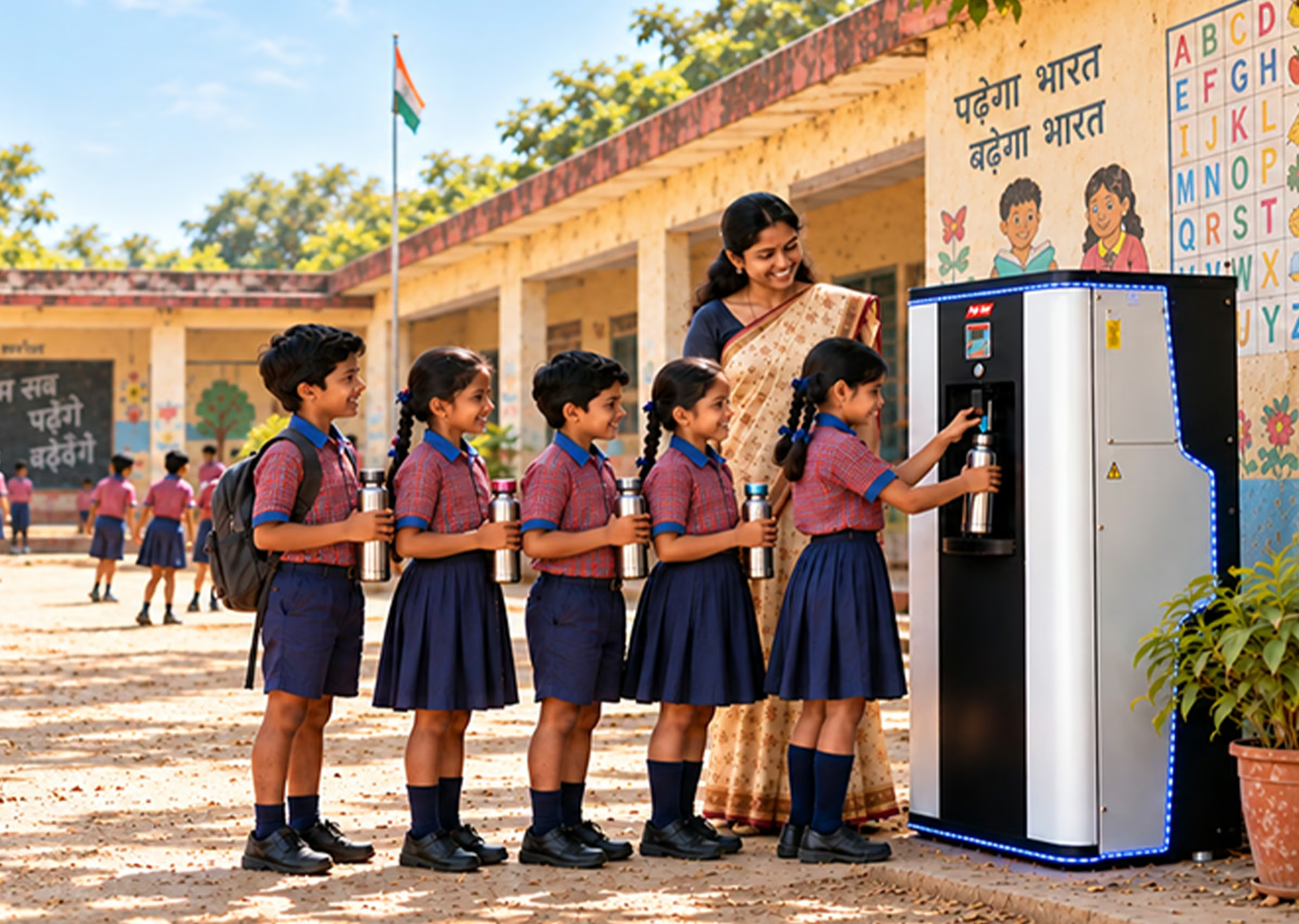
Schools
A school is built and staffed, but the nearest safe water is a long walk away, so students carry water from home or drink from whatever source is closest.
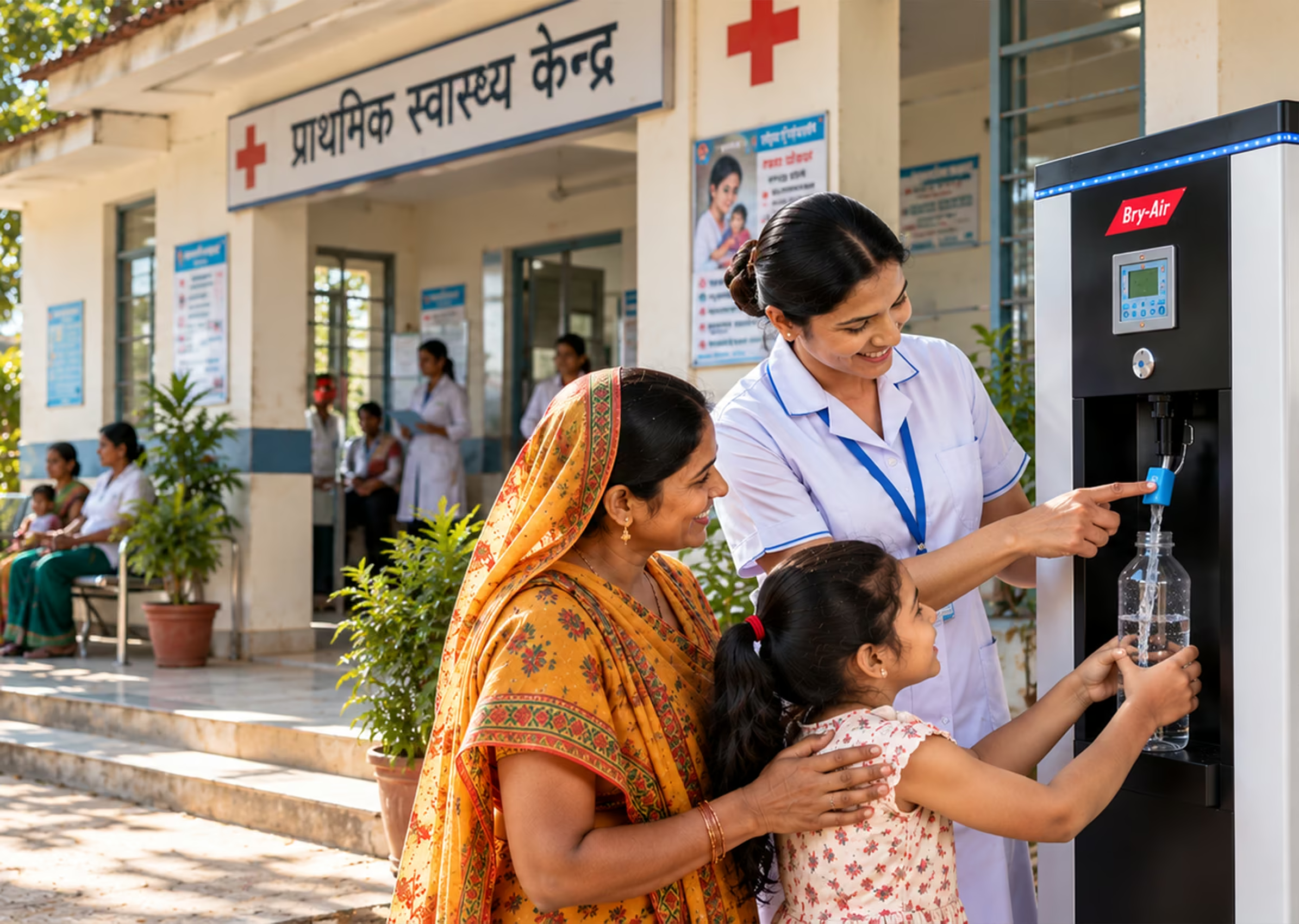
Healthcare Facilities and Medical Camps
Clinics and camps rely on tanker or borewell water whose quality cannot be consistently verified.
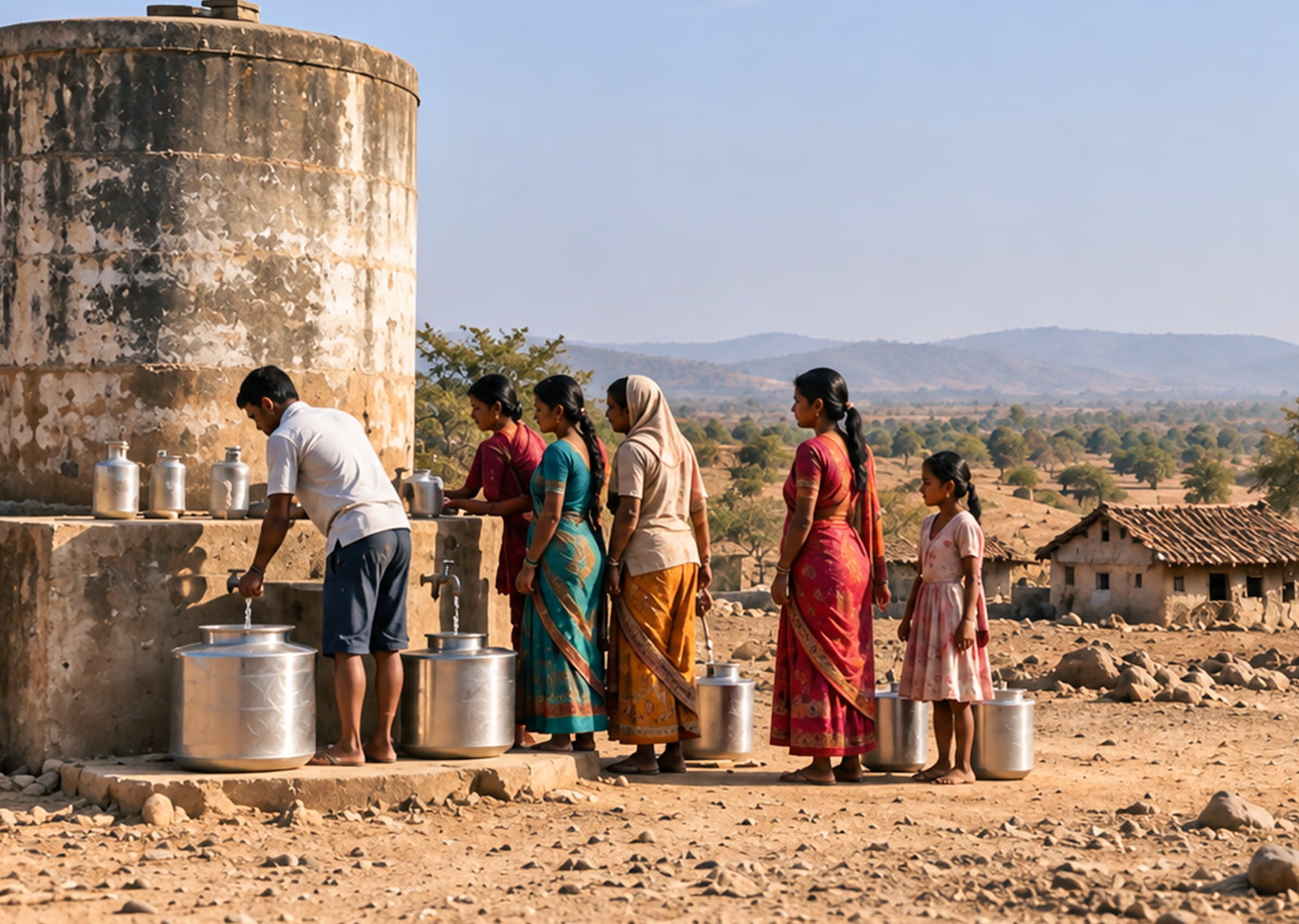
Remote Communities
The habitation lies beyond the practical reach of piped schemes, where terrain and distance, rather than budget, prevent a connection.
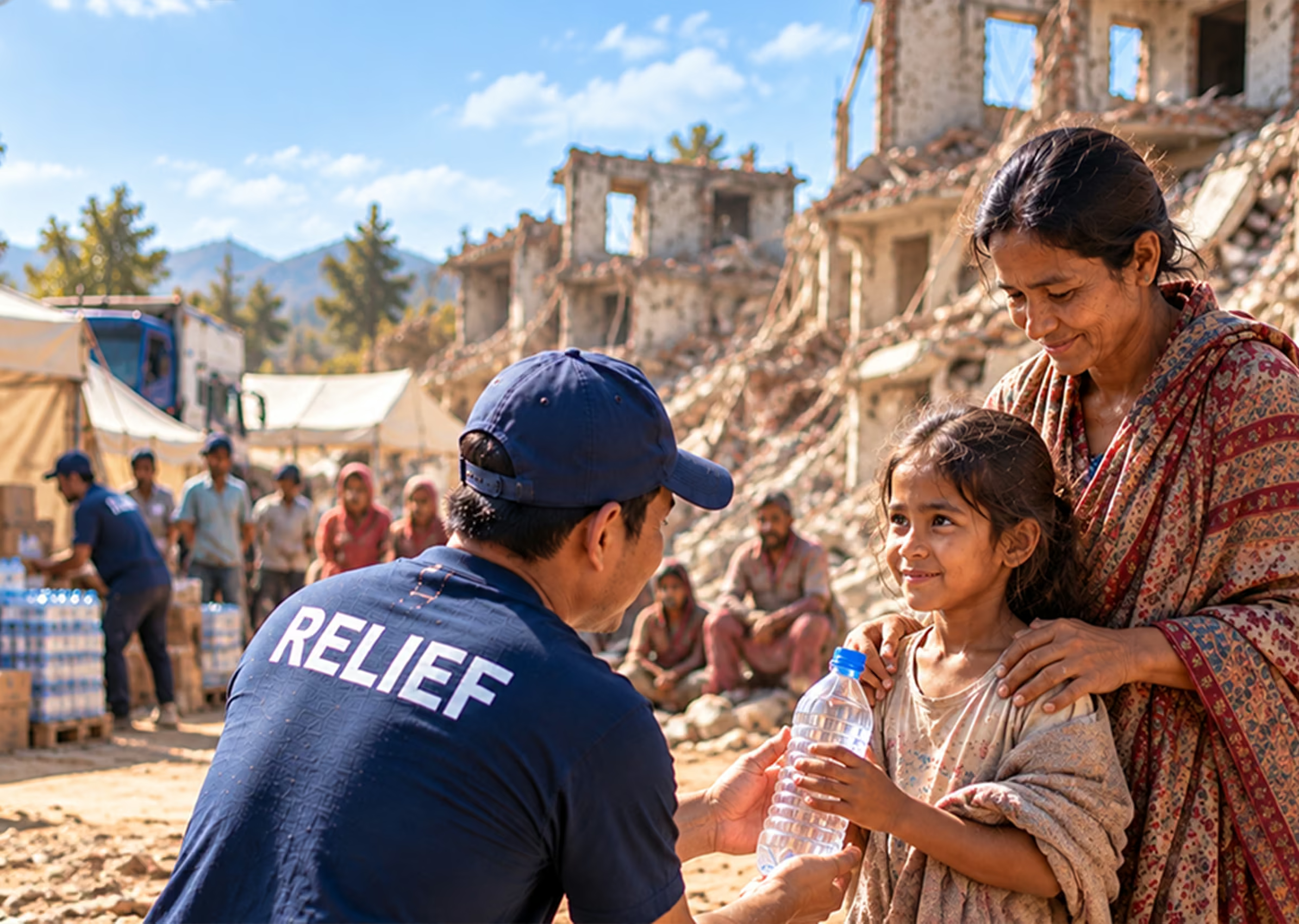
Disaster Relief
Floods and other emergencies contaminate local sources, leaving relief camps dependent on trucked-in supplies.
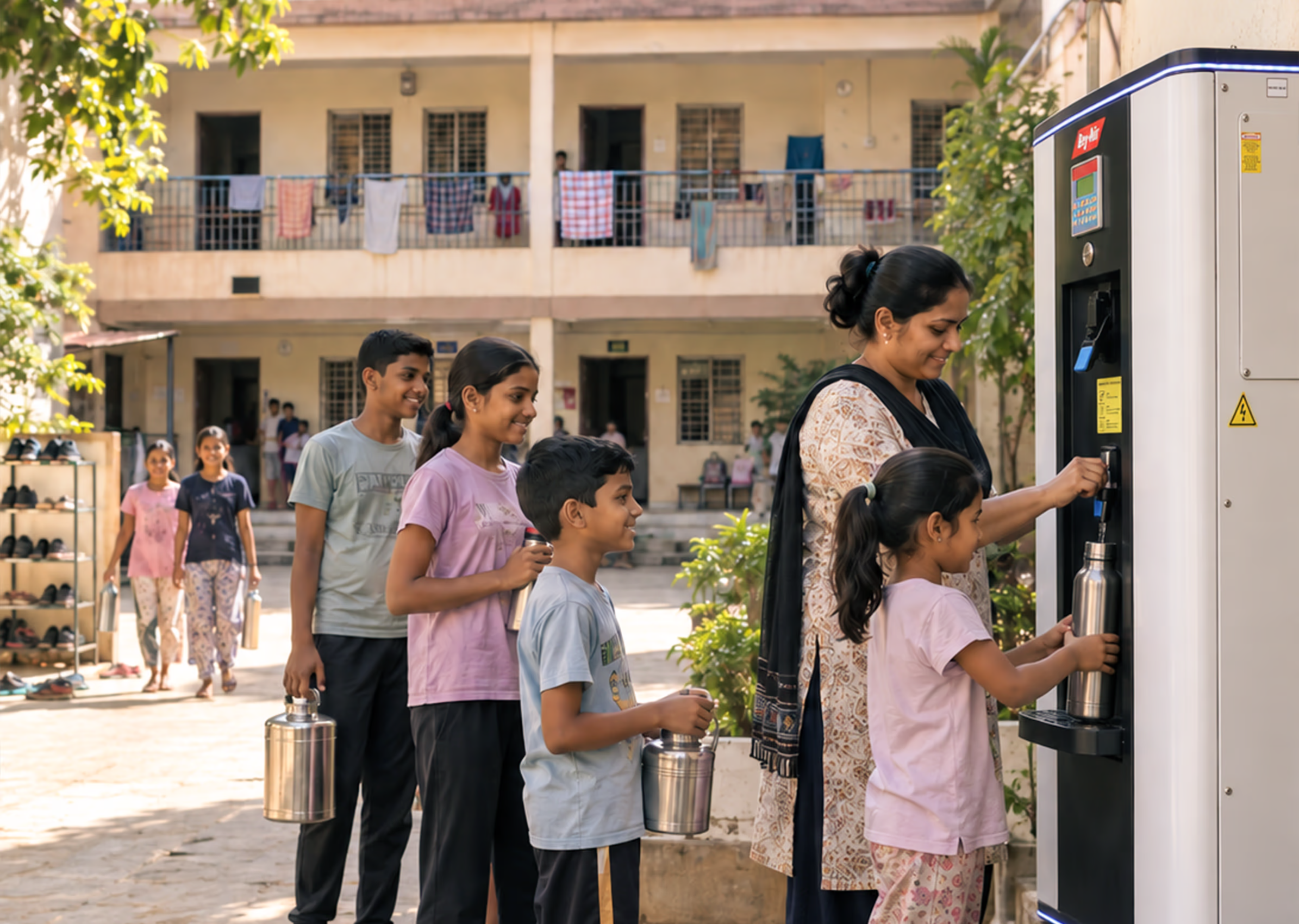
Residential Institutions
Hostels, orphanages and community homes need drinking water every day of the year, including the months when local sources run low.
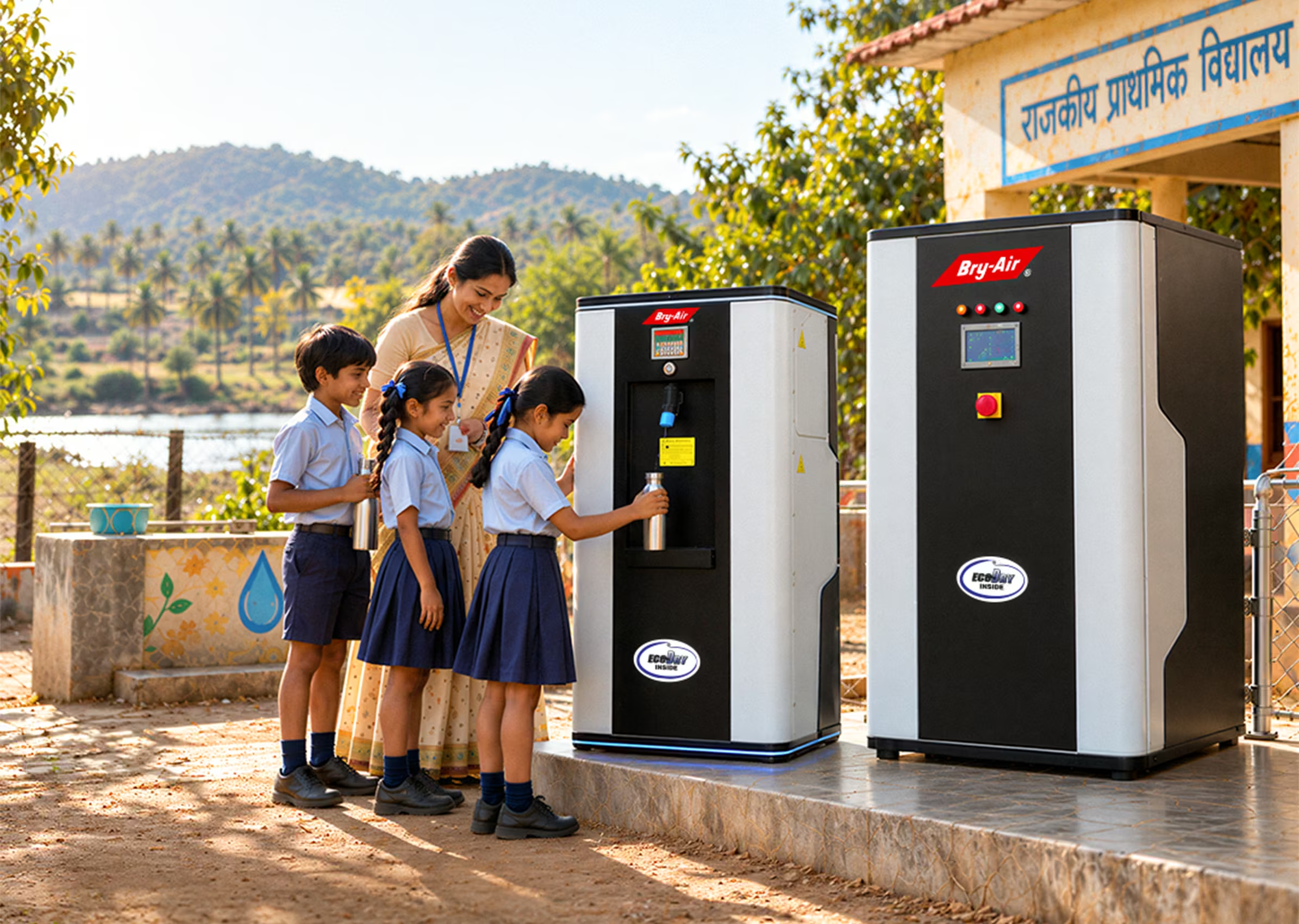
NGO and CSR Projects
Funded infrastructure is complete, but safe drinking water was never something the site could provide.
WHY SHOULD AN NGO, TRUST OR CSR PROGRAMME CONSIDER AWG?
Create Water at the Point of Need
Produce drinking water where it is used — at the school, clinic, shelter or camp — rather than transporting it there.
Reduce Dependence on External Sources
Lower reliance on tankers, bottled water and stressed groundwater. Because AWG draws from air rather than the ground, it adds no further extraction pressure on local aquifers or water bodies under restoration.
Simple to Install and Operate
Compact units designed for continuous operation with minimal supervision, suited to sites without dedicated technical staff.
Consistent Drinking Water Quality
Water is filtered at the point of production, so its quality does not depend on a transport or storage chain.
Predictable Water Costs
Replace recurring tanker and bottled-water spending with an on-site source whose running costs can be planned in advance.
Deliver Visible, Measurable Impact
Each unit produces a quantifiable daily output — a clear, reportable outcome for funders, trustees and CSR committees.
WHAT DETERMINES AWG VIABILITY?
AWG performance depends on the site's climate and on how the water will be used. The most important inputs for an NGO or CSR deployment are:
| Site / Project Parameter | Why It Matters |
|---|---|
|
Temperature & Relative Humidity
|
Determines the moisture available in the air and the unit's daily output. Units are rated at 27°C and 45% RH; output increases in more humid conditions. |
|
Number of People Served
|
Establishes the daily drinking water requirement and whether a 55 LPD or 200 LPD unit is appropriate. |
|
Site Type & Usage Pattern
|
School hours, round-the-clock residential use or a temporary camp each create a different demand profile. |
|
Power Availability
|
AWG requires a reliable electricity supply; power access is a key feasibility check for remote sites. |
|
Existing Water Sources
|
Determines whether AWG serves as a primary, supplementary or assured-quality drinking water source. |
|
Drinking Water Quality Requirement
|
Determines the filtration and dispensing configuration for direct consumption. |
|
Local Operating Capacity
|
Determines the training and service support needed where no technical staff are on site. |
|
Deployment Duration
|
Distinguishes permanent installations from temporary relief or camp deployments. |
Every NGO or CSR site needs its own AWG assessment.
Each assessment weighs the site's climate against the number of people to be served, the reliability of its power supply and, above all, whether any existing water source is available and safe to drink.
AWG AS A COMMUNITY DRINKING WATER SOURCE
For NGOs and CSR programmes, the value of AWG lies in making safe drinking water a dependable part of the project itself, rather than an external supply to be arranged. Depending on site conditions, AWG can serve as:
Primary Source
Where no safe drinking water source is available within practical reach.
Supplementary Source
Where an existing source is insufficient or seasonal.
Assured-Quality Source
Where water is available but cannot be relied on as safe to drink, supplying drinking water while other needs continue from existing sources.
Emergency Source
Supporting relief camps and temporary deployments where local sources have been compromised.
Water Availability
Water Availability (Higher AWG Importance)
Water Independence Starts Here
From personal units to industrial-scale systems, Bry-Air AWG delivers reliable water generation wherever it is needed.
Talk To Our Experts